Apples to Apples

Apples to Apples

Last week I finally had a chance to compare apples to apples.  For most of my new life I have felt disconnected from my past.  Last Monday I did a 2 1/2 hour interview with the NPR show, Radiolab.  (I’ll let you know when it airs.)  The interviewer was intrigued that I always refer to my male self in the third person.

Shortly after I transitioned I protested to my son that I was the same person I had always been. I have rarely heard him speak more forcefully.  “No! No, you are not!”  And sure enough, I’m not.  Ever since I grasped that difficult truth, I have talked about Paul and Paula as if they are two different people.  In the future I hope I feel more integrated, but it’s been hard.  My almost complete ostracism by the evangelical church is a factor, but I am discovering it goes far deeper.

Last week I had a few days that resembled my past life.  It was a rare moment when the worlds of Paul and Paula were similar.  I was one of the leaders of a retreat of church planters, my first in five years.  The retreat was much like scores of retreats I have led over the years, but for me the experience was profoundly different.

Two of the attendees were at retreats I led in the past.  One talked with me toward the end of last week’s retreat.  He said, “You look 10 or 15 years younger than you are, and if you sense that your presence does not carry the same weight it once did, you are correct.”

Is it that I look younger, or that I am a woman, or that I have not led my current ministry for over a quarter of a century, as I did in my last job?  Truth be told, it’s probably all three.  And there is no denying the reality of his words.  My presence does not carry the weight it once carried.

So when you try to lead from a place of memory and your world has changed as drastically as mine, the results are less than stellar.  I called on Paul’s presence, knowledge and background, but it was not even remotely the same experience.  I was comfortable with the 10 women in the room, but I felt at a distance from most of the 20 men. I imagine it was mostly inside me, but I was not comfortable throughout the entire retreat.

Right before my Radiolab interview I spoke with a film production company that is interested in my story.  I watched one of the movies they made.  Minnie Driver and Paul Adelstein played the lead roles in a story of grief and pain through difficult transitions.  Sean Hamish, who wrote and directed the movie, understands the subtleties of redemption a long time coming.  I am very favorably impressed with the company.

Should a movie be made, who would play me?  I would say no to anything resembling Jeffrey Tambor being cast as the transgender woman in Transparent.  No man should play a transgender woman unless he’s been on anti-androgens and hormones for years.  Whoever plays me, it will still only partially feel like my story.  That is because my entire life feels like a character in a novel that has not yet been fleshed out, so why would a movie be any different.

So much of my unsettled nature seems to be gender related.  I know.  You are thinking, “Duh!”  But let me explain.  From my high school years on, I was one of the cool kids, smart, popular and powerful.  Today my unique presence in the world still affords me a position of privilege, but primarily as an observer.  I do not fit into any specific world.  I no longer feel comfortable with the cool kids, but the group with which I feel most comfortable is a world I will never fully understand.

I feel at home with the wise and weathered mothers of the world.  They have known pain in their bodies that causes them to ponder things in their hearts that I will never know.  But I want to learn from their wisdom, to take in their fullness.

When they talk about their experience of life, sometimes I have this notion that I’ve lived before and given birth.  Is it what Jung would call the collective unconscious, or the cellular level at which we are all connected?  Hell if I know.  I just know that through a fog somewhere I have a notion of things both behind and before me that hold all of us in the same magnetic field.

What does it mean to be transgender?  What does it mean to be male or female.  I really don’t know.  But I do know what it means to be human.  It is to understand the interconnectedness of us all.  I struggled to feel that interconnectedness last week, and that’s all right.  We all have our shitty weeks.  But I am committed to walking in the shoes of all the people God brings into my life, to see life through their lens.  It’s hard work, but after so many have done the same for me, how could I choose to live any other way?

That Rush of Dopamine

That Rush of Dopamine

Do we ever lose our need for affirmation?  Does our ego ever bed down for the night and wake up in peace?  Do the scales of wellbeing ever become balanced between ego strength and ego need?

These are valid questions, but I am not the person to answer them.  I am afraid to say after all these years my need for affirmation is still a bottomless well.

People who can be classified as narcissists also have a never-ending need for affirmation, but their need is also accompanied by a lack of empathy and a tendency toward grandiosity.  If you watch television you will find a ready example each and every evening on the news.  But this post is not about our narcissist-in-chief.  It is about being human.

I was about five when Elvis Presley became popular.  The way he moved and swiveled his hips was scandalous in my church, but at my grandmother’s house there was greater tolerance.  One summer afternoon I discovered that by playing an imaginary guitar (long before air guitars became a thing) and singing You Ain’t Nothin’ But a Hound Dog, I could get the attention of a room full of adults.  I was hooked.  It wasn’t long before I was singing solos on Sunday nights at church, partly because I liked to sing, but mostly because for three minutes all those people were mine, all mine.

I was nervous every single time I sang, just as I am nervous every single time I preach. There are a lot of collective minutes in the audience.  A church service with five hundred people at 20 minutes each is 10,000 collective minutes. I am not inclined to waste minutes. But as concerned as I might be for my audience, I know that to a greater or lesser extent, it is also about me. And that is where my concern lies, in that greater or lesser extent.   All of us have ego needs, but when does normal become abnormal?

Last fall I was asked to speak for Denver’s TEDxMileHigh Wonder event.  The invitation came after their curators heard me on Colorado Public Radio.  I was initially skeptical, but the more I read about TEDxMileHigh, the more I realized it was a big deal, so I said yes.

First, we had to decide on the subject about which I would speak.  Once that was determined, I started writing.  Three weeks before the event, I was at edit 21 when I was asked to switch subjects.  I was good with the change, because I agreed with the TEDx folks.  The new subject might bring a wider audience.  Besides, I really liked the idea of talking about the difference between living as a male and a female.  So I began writing again.  The final edit was number 18.

For reasons I won’t write about today, the day before the event I was a wreck.  The day of the event I was normally nervous, which means scared shitless, but ready to go.  The sold out audience of 5,200 was wonderfully responsive and rewarded my talk with a standing ovation.

A month later the video came out and my obsession began.  I watched the first evening as the count shot up to 1300, but then slowed down to a trickle.  By the middle of February it had clawed its way to 10,000 views, but hardly a stellar performance for a TEDx talk.  From December to February I looked at the count every few days.  But then came February 24.  I have no idea what happened on that particular day.  Maybe it was Melissa Greene linking to my talk from her Facebook page, but it took off and started growing to about 7500 views a day.

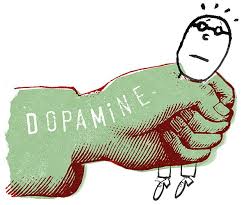
I was hooked, intoxicated by the dopamine rush that accompanied frequent checks of YouTube. The count went to 10k a day, then 15k, then 20k.  I became obsessed with looking multiple times a day.  I mean, obsessed.

About the middle of March the views peaked at 30,000 a day, but I wanted more.  Then the numbers began dropping, first to 20k, then 15, then 12, 10 and 7.5.  My ego was bruised.  The more the numbers dropped, the more obsessed I became with following them.  They have settled down to around 5k views a day, and I was just beginning to come to my senses and put the whole thing in perspective when Amy Schumer linked to my talk from her Twitter account with the line, “Love a good TED talk.”

I was thrilled. I mean, it’s Amy Schumer!  But my numbers didn’t go up on YouTube.  Then a producer from Radiolab called and asked me to do an interview. They did one 75-minute interview, followed by a two and a half hour interview yesterday.   I mean, it’s Radiolab, one of the best shows on NPR!  I adore Radiolab!  But of course my first thought was, “Yeah, but being interviewed on Radiolab probably won’t bump my YouTube views.”  And that is when I knew I had a problem – YTCA – YouTube Count Addiction.

I imagine my YTCA will require intense psychotherapy, as well as behavioral therapy, which will include including limiting my views of YouTube.  Or, oh no, please no, maybe I’ll have to stop counting completely!

But I love my little dopamine rush.  I just spent a week with my five granddaughters.  It was wonderful.  I had a delightful time with my kids and their spouses.  My son preached at Left Hand Church last Saturday and did an amazing job.  I mean, my life is blessed without YouTube, right?  So what is my problem?

The whole episode really did cause me to read up on dopamine rush, the reward molecule that gets excited every time a text dings.  Since we became a nation fixated on social media, it has become a genuine problem.  But I will write about that another day.  Today, it’s all about me.

I have committed to not checking my numbers this week.  We’ll see how it goes.  I’ll let you know.  And so I leave the count where it was last night, at 435,800 views.  Aw gees, I do have a problem.

Heads in the Sand

Heads in the Sand

This past week brought another round of accusations and resignations of people with high standing in the evangelical world, as #ChurchToo follows on the heels of #MeToo.  It also brought another round of evangelical backlash, including standing ovations for a megachurch pastor accused of inappropriate sexual behavior.  Ten years ago I would have been shocked.  Today I understand how far people will go to reaffirm what they want to believe.

In one of this past week’s high profile stories, a church, in its own investigation of sexual harassment allegations, used a service that specializes in representing management.  That decision caused some of the victims to feel the investigation process might not be unbiased.  Their concern was justified.

In the Hebrew concept, cHesed, when a person enters into a contract they are not doing so to look out for their own self-interest. They are looking out for the best interest of the other person.  That is definitely not how American contracts work.

When I was let go by my main employer for being transgender, they chose to engage the services of an attorney who specialized in Christian employment issues.  Looking out only for the ministry involved, the attorney informed me I would not receive virtually any of the funds that had been promised, including my own personal funds that remained with the ministry. Things were finally resolved when attorneys were by-passed and people who trust one another worked things out.  Nothing about the experience was all right.

That experience is coming back in waves as I watch powerful ministries use their positional power to functionally intimidate accusers.  I know the accusers to be people of great integrity and I despise seeing churches and Christian ministries defensively protect their own interests at the expense of those who are reporting sexual harassment.

I previously made allowances for those who saw my coming out as a moral failure, though the Bible says not one single word about being transgender.  I would say in their defense, “They were confused and frightened.”  I’m done with that.  Those from the evangelical world who continue to accuse me are not naive and innocent. They are willfully ignorant about LGBTQ realities.  And now, as I watch those same people turn their gaze away from sexual harassment and assault, I find my generosity depleted.

The evangelical world lives in a white male bubble, overseen by men who are unaware of how pervasive sexual assault is within their environment.  They tend to think the only kind of sexual assault is rape, without realizing how many other behaviors are also sexual assault.  In case you didn’t know, asking a woman to come to your hotel room and attempting to kiss her is sexual assault.

I know the inside of the megachurch world.  For the most part, it is filled with people who want to get it right.  When they see inappropriate behavior, they act on it. The problem is that when the majority of leaders are white males, they often don’t recognize inappropriate behavior when they see it.  Not many churches have seminars on sexual harassment.  Leaders do not even know what it is. They just assume they do not have a problem.  They don’t know what they don’t know.

I have an idea. Instead of having firms loyal to an employer investigate claims of sexual harassment, let non-church-employed therapists adjudicate matters.  Most have clients who have been taken advantage of by church leaders. There is no wool over their eyes.  They know where there is smoke, you can be pretty sure you are going to find fire.

When victims choose not to speak to “objective investigators” it is because they rightly understand those investigators are not objective.  It takes incredible bravery to speak out about unpopular truth.  You get no stars for bringing down a religious leader.  Instead you are likely to be vilified.  People do not like to see their heroes brought down.

Evangelicals feel under siege, but it is a siege of their own making.  No one is out to get them.  The problem is that they have no idea how out of touch they are about gender discrimination, sexual assault, domestic violence and a plethora of other ills. Keeping their heads in the sand will no longer be tolerated.

The enemies they have created are nothing more or less than people who believe in the ability of the truth to set all of us free.  They should not be feared. My prayers are with those who have so bravely spoken out.  Let’s protect them and assure a truly fair-minded process as their claims are vetted.


Shattered and Whole

Shattered and Whole

Last month my blue Cath Kidston mug broke. Cath Kidston discontinued the style and none remained in stock. However, several of my readers found the mug online at another British company. Unfortunately, it was four times more expensive than the original piece. Nevertheless, someone decided to have the mug sent to me, which was so very thoughtful. I am drinking my morning tea from the mug as I type.

In a meeting last week in which the pastors of our new church were telling our Leadership Council how we were doing, I said, “I’m not going to lie. My life is really difficult. It is hard to be hated by so many people.” In the previous seven days I had been mentioned negatively in scores of alt-right and fundamentalist Christian publications and web sites. When I was speaking with Bishop Gene Robinson last year, he said, “The toll of being attacked is cumulative. You think you can dismiss the ignorance, but it finds it way past your defenses.” Uh, huh.

But life has these wonderful compensators. The attacks against me have been matched by a phenomenal outpouring of generosity. Since my TEDx talk became popular, people from Australia to Sweden have written to express their appreciation for my openness, authenticity and spirit. One writer mentioned she had never seen a YouTube video with as many “likes” per views as mine. I took a look on the Internet and sure enough, a lot of people have liked my video.

Then the mug arrived. I was with my fellow pastors when we saw the box. Given the threatening responses I received from the alt-right, I was afraid to open the package. Jen’s husband Eric opened it for me. We were all a little nervous. But when the opened box revealed a beautiful blue mug, I was more than relieved. I was elated. And I was reminded, “Yes, love wins.”

I am keeping the broken mug. The new one has a spot on the bookshelf where the old mug used to be displayed. The broken mug is on my grandmother’s dry sink in my office, all of its pieces gathered on a gold dinner plate. I see it all day long, just to the left of the Rocky Mountain view outside my south-facing window.

This is my life, shattered and whole, hated and loved, torn apart and put together. I will keep both mugs close. I love the broken mug. I identify with its jagged edges, the handle clutching the memory of a space, and the tiny specks that cannot be reassembled. I love the new mug, a sign of so many that love me so well.

As a white male from the privileged side of the tracks, I had no idea just how difficult life is.  I thought it was hard fighting gender dysphoria.  What I faced back then was nothing compared to what I face now.

Not long ago a female client of color said, “There is nothing I am facing that my pastor has not faced and he seems to find the strength of the Holy Spirit to take him through his dark days.  Why can’t I?”  She attends a megachurch.  I thought long and hard before I responded.   “Your journeys are very different,” I said.  “You might find more help from the words of Jesus than from the words of a successful white male pastor.”

I am not diminishing the experience of her pastor, a man I know.  But his experience has little in common with hers.  Sometimes I want to go back and re-preach every sermon I ever preached as a male.  Instead, I must show myself grace.  As I said multiple times in my TEDXMileHigh talk, “I just didn’t know what I didn’t know.”

As a public figure, generous gifts have always come my way.  I have also always had my share of detractors.  But there are so many more detractors now, which makes the gifts mean so much more than they ever did before.

What I did not mention at the outset of this post is that I have received two identical blue Cath Kidston mugs within the past two weeks.  A note in the second mug had the name of the gift giver, but it was not legible.  So, whoever you both are, from the bottom of my heart, thank you.  I am blessed beyond measure, far more than two cups worth.

That Day My TEDxMileHigh Talk Was Mentioned on Fox News

That Day My TEDxMileHigh Talk Was Mentioned on Fox News

Last week was interesting. I received an email from a professor at Indiana University of Pennsylvania saying my TEDxMileHigh video had been used in her class, resulting in disciplinary action against a student. Because the case had not yet been adjudicated by the university, the professor could not speak publicly about the incident.

By the time I did a Google search, the incident was on Fox News, The London Daily Mail, Breitbart News, and a host of alt-right and Christian sites, including CBN, Christian Post, and Franklin Graham. None of those outlets sought comment from me. It is also important to note that none of them waited until the completion of due process at the University, when the professor and the university would be able to speak.

Several of the outlets made accusations about the TEDx talk that showed no one at the media outlet had actually watched the talk, or if they had watched it, had blatantly misrepresented its content.

The only media outlet that asked me to comment was the local newspaper, the Indiana Gazette. Their reporter watched the video, accurately quoted from it, and accurately quoted my words from his conversation with me.

The Fox News article devoted exactly 23 words to me. Five of the words, or 21 percent, were inaccurate. To put that in context, when the New York Times published its article about my son and me, Faith and Family in Transition , in June of 2017, that 4,000 word article had not one single error. Had the New York Times article contained as many errors, per word, as the Fox News article, the Times article would have had 840 errors.

When Franklin Graham tweeted about the story, he asked for prayers for the student, speaking as though the student had been a victim. The truth is that until the university issues its report, we have no idea whether or not the student is giving an accurate depiction of the event.

Truth matters. Jesus taught that it sets us free. That Christian leaders and multiple media outlets would publish information without adequate regard to its truth is frightening. It is non-Christian; it is malevolent. It shows no regard for the professor, the university, the other members of the class, or me. It endorses the single perspective of one young male student, while leaving all other voices silent.

A study posted this past week by three MIT scholars showed that false information travels more quickly on Twitter than true information. Last week the inbox of this blog was flooded with accusations and threats, which caused me to have to shut down all comments and remove contact information from the blog. The negative comments on the TEDx talk bloomed like a mushroom cloud. (It should be noted that the overall response to the TEDx talk, which now stands at over 300,000 views, remains 93 percent positive.)

In posting this blog, I have a fear. I fear I will have to delete comments from the left that are as inflammatory as the comments I have had to delete from the right. Last week I posted a very short piece on Franklin Graham’s decision to tweet about the incident. The number of Facebook friends who wrote pejorative comments about Graham alarmed me enough to pull the post.

Attacking those on the right is not the answer. Advocating for truth is the answer. It takes rigorous inter-subjective work to discern the truth. Major media outlets do not publish a story until they have multiple sources. Even if you do not agree with their editorial leanings, you can trust that they will go to great lengths to discover the truth, and will publish a correction if they make an error.

The deconstructionism we see in postmodernity is partly to blame. It begins with the notion that all truth is constructed truth. But through rigorous inter-subjective discipline it is possible to get very close to objective truth.  And it is essential that we try.

I am very concerned about the current disregard for truth we find in America’s highest office, and the trickle-down effect it is having on the rest of American culture. I know the truth of my current status in life. It is on the bio of my blog and the TEDxMileHigh site. I know what was in my video. I was the speaker. TEDxMileHigh did not edit out a single word, breath or step. And the media outlets could have known what was on the video too.  All they had to do was watch.

Shame on those who put their own agenda above the truth.  Shame on those who were not willing to take 15 minutes to learn the truth about my talk, or wait five days to hear the other side of the story.

Lies destroy.  Truth sets us free.

The Body Knows What the Body Knows

The Body Knows What the Body Knows

I wonder how Pavlov’s dogs felt? Did they know he was messing with them? Did they know the limitations of their own brains? While I think we often underestimate the capacities of canines, it is safe to say Pavlov’s dogs did not spend much time examining their motives. They just loved Pavlov and their keepers, as dogs are inclined to do.

When animals in the wild are traumatized, their responses are predictable. They enter a state of hyperarousal, followed by constriction, or hypervigilance, followed by either fight, flight or freeze, depending on their instinctual response. If the response is to freeze, there will be dissociation and helplessness. When the entire threat has dissipated, there is a visible discharge of energy, as the animal will shiver and shake, literally shaking off the trauma. Life goes on, and the animal is not in need of therapy.

Not so we humans. Because we have a reptilian brain (instinct), a mammalian brain (emotions,) and a neo-cortex (rational thought,) our responses to trauma are far more complex. If we experience trauma and are able to go through all of the animal stages of response, life goes on and we are relatively unscathed. But if we are not able to discharge that energy, trouble brews. The energy stays in our bodies and our bodies conclude we are still in danger.

During the summer months I often encounter rattlesnakes when I am out mountain biking. It is always fascinating how quickly my body responds to the danger. I stop the bike on a dime, or swerve around the snake, or lift my feet and ride right over top of the snake, whatever is called for. But after it is all done, I frequently tremble and shake. I get off the bike and shake my arms and legs, ridding myself of all that adrenaline.

I wish it was that easy when it comes to the weeks and months after I came out as transgender. When I learned I was being virtually expelled from the religious fellowship in which I served, I cried and paced and went for long runs. But I couldn’t risk fighting back, for reasons that do not need to be rehashed in this post.  My response had to be measured, which was not helpful in discharging the energy that had built up. That was not good for what Mary Oliver would call, “the soft animal of your body.”

My post-transition trauma came back last week in the form of post-traumatic stress.  Since my TEDx talk began increasing in views (it’s at about 180k now) there have been a lot of positive and negative comments on YouTube. No one likes to read negative comments about themselves, but all in all, it hasn’t been too bad. But here’s the thing. I have no unresolved trauma with those people.  Therefore the negative comments have little effect on me.

On the other hand, a number of people from my former world had comments about last week’s post. I posted and answered one thoughtful question from a kind and gentle man I greatly respect. But the other comments triggered me. You do not see them in the comments section because I do not publish comments that are not respectfully presented.

I was surprised I was triggered by the comments, but there was no denying the truth. I began shaking. Our bodies tell us when there is unresolved trauma. I realized these were people who can still wound me because I was never able to fully discharge the energy generated by my trauma when I was expelled from my religious tribe. So what did I do?

First, I acknowledged I was triggered. The level of my response was not connected to any current reality. It was rooted in the past. Second, I named the reality. I was responding to a time when that community had my wellbeing in its hands. That is not my current reality. Third, I allowed myself to feel all the emotions my body was feeling. I let the feelings run through me, not frightened of them. When they had run their course, I did something compassionate for myself. I called my two co-pastors at Left Hand Church and talked about the good work we are doing together.

All of us have experienced trauma. Life dishes it out to a greater or lesser degree to every last one of us. Allowing our bodies to work through that trauma is a critically important part of emotional and physical healing. Stuffing your feelings does not work. We do not get to consciously choose the moments in which we are triggered, or what it is that triggers us. But we do get to choose how we will respond.

( By the way, this blog has not only had comments coming from my former tribe. I am getting an inordinate number from the alt right in reaction to my TEDx talk being included in a media occurrence back east. So for the moment I am not allowing comments on any pages of my blog. Phone numbers have also been removed from the website.  Sorry. Things should get back to normal soon.)

Knowing What You Know

Knowing What You Know

Far too often the American conservative church has not been very helpful when it comes to teaching people how to be adults. Let me explain.

When you are a child you do not have an internal locus of control. Your primary caretaker, most often your mother, is God, and is in control of your entire universe. Her face reflects what it means to be human. Her touch brings safety and assurance. Eventually she brings self-assurance to you, as you begin to discern you are a separate being. That self-assurance is tenuous without three basic elements in place.

First, your parents must be able to set aside their own needs to focus on yours. Second, they must make sure you feel safe. Third, they must provide you with a sense of self-worth. These are the basic building blocks of a healthy ego. But note that the locus of control remains external. Someone else is in charge of your life.

One of the main jobs of parents is to lead their children to mature adulthood. That means teaching them to accept responsibility for their own actions. It means teaching them the necessity of honesty in interactions with themselves and others. It is helping them learn to delay gratification. And good parenting demands that we help our children differentiate from us and create their own maps with which to navigate through life.

That last job means we must help our children transfer from an external locus of control (mom and dad) to an internal locus of control (the maturing child.) It is the most frightening part of parenting, because it is a process fraught with peril. In fact it is so frightening that many parents abdicate their responsibility and encourage their children to continue with an external locus of control.

In extremely unhealthy families, this means parents who try to remain the primary figure in the lives of their children. (Think the mother in Everybody Love’s Raymond.) But far more frequently it means transferring the locus of control from one external source (mom and dad) to another external source, the tribe. Often that tribe is a religion. Sometimes it is a cult. And sometimes telling the difference is difficult.

The problem is in the transfer from one external locus of control to another. The parental job is not to replace biological parents with tribal parents. It is to replace biological parents with a fully differentiated, individuated person. It is to help the child transfer from an external locus of control to an internal locus of control.

An internal locus of control does not negate the desire for a tribe. We are a tribal species. It is baked into our DNA to want to be a part of something larger than ourselves. But when we begin to violate a healthy conscience by adherence to the strictures of an external locus of control, it is not a sign of health.

Let me use an example that is not uncommon in our current environment. Suppose you have friends or family who are gay, and in your everyday interaction it is fairly clear that these are normal humans, roughly as healthy as you. With a healthy internal locus of control, you are empowered to decide that this is a safe person.  You have within yourself the capacity to make these determinations. An internal locus of control means you have learned to trust your instincts, and your internal common sense.

If, on the other hand, you have an external locus of control that tells you homosexuality is an abomination to God, you reject your instincts and internal common sense. Even though you do not find any other reason to reject this person, you nevertheless reject them because you have given away the power to make those determinations. You have maintained an external locus of control, in this case, a religious body.

There was a time when I believed women should not preach, nor should Christians be in gay relationships. Nothing in my personal experience said these were bad things. In fact, to the contrary, I found women preached with a perspective not available to men. And I had gay friends who were extraordinary humans, far more Christ-like than I was. But my adherence to an external locus of control caused me to reject what my heart, mind and soul was telling me.

I have since realized when my understanding of Scripture causes me to reject what my heart, mind and soul are telling me, the problem is not with my heart, mind and soul. It is with my understanding of Scripture.  The problem is that I have made my heart, mind and soul subservient to my tribe.  When your tribe’s interpretation of Scripture violates your own conscience, the question you should ask yourself is why you have opted for an external locus of control.

For religious people, the answer is often that we have been taught that our bodies are evil and not to be trusted. Our sin causes us to deceive ourselves. Since we cannot trust ourselves, we must submit to an external power. Of course, this is great news for the tribe. It guarantees its ongoing existence. If the tribe can make us afraid of our own conscience and common sense, it can maintain the control necessary to remain in power.

It is interesting that when people talk about our sinful proclivities, they often quote the writings of the Apostle Paul. But when I look at the writings of Paul, particularly in his letter to the church at Rome, I find Paul more concerned about the sin that encompasses us when tribal rule takes over than the sin zipped up inside our own beings.

It seems to me that the greatest evil done in the world is done when we are confidently acting within our tribe. Only then do we throw away personal conscience and common sense. That is how we got the Holocaust, or for that matter, Charlottesville. That is what happens when one maintains an external, instead of an internal, locus of control.

It is frightening to have to trust your own soul. It means you are free, and freedom is terrifying. But here is the thing.  We are made in the image of God.  We can trust our basic construction. We all need the guidance of a tribe from time to time, but when you are constructed in God’s image, your internal locus of control, if you are willing to trust it, will reliably lead you in the direction of the truth.  The question is whether or not you will trust it.


A Weekend in San Diego

A Weekend in San Diego

After an article appeared in the New York Times about his church and his relationship with me, my son was offered a book contract.  We haven’t talked a lot about the book. I know he has been working hard on it. I also know he is writing about his experience of my transition from his father to, well, I don’t know exactly what you’d call me. I suppose I am his “parent who is no longer his father.” It seems like Native Americans would have a word for that. Westerners do not.

The book is also about his leadership at Forefront Brooklyn, a church he started in New York City five years ago. Forefront Brooklyn is a daughter of Forefront Church, a congregation begun by the Orchard Group, the ministry with which I served for 35 years, most as CEO. Jonathan led his congregation into becoming a full membership church, a congregation in which anyone can serve in any position, regardless of gender or sexual identity.

Leading his congregation through that process necessitated his leaving the Orchard Group, which I know was painful for everyone involved. By the time that happened I was already gone, having been let go immediately after coming out.

One chapter of Jonathan’s book is about the future of the American evangelical church. He asked me to write a few thousand words that could be used in that chapter. My first draft is already finished. I used to teach a Doctor of Ministry course entitled, “Current Trends in the American Church.” I like writing about that stuff, and did it every week for 12 years at the magazine where I was editor-at-large.

This past week Jonathan also asked me to write about two specific days, one in the fall of 2014 and the other in the spring of 2015. Writing that section has not been easy. I’ve written 1400 words about each. I have not seen what he is writing about those days.

I didn’t think I remembered much about either day until I started thinking about them. There is an entire 18 months of my life that is kind of lost. I sometimes wonder if I will look back ten years from now and not remember much about my current life either. I thought it would take about five years to fully work through my transition. It is going to be closer to 10. I hope it is only 10. This stuff is not for the faint of heart.

I am actually not sure I am ready to read what Jonathan has written. I imagine it is going to be painful. I mean, the experience itself has been painful, so the memorialization of it is also likely to be painful. I know he will be honest about it.

People often ask if I am planning to write a book about my experience. I am not. I had a few offers from publishing companies, but I’m maintaining a counseling practice, planting a church, starting a church planting ministry and writing a weekly blog. Besides, I wrote nine books.  I’m not sure I have another one in me.

I had a lot of complex feelings when I was writing about those two days. On the days I was writing I was also speaking for the Mission Gathering Revive Conference in San Diego, an enjoyable weekend event. I wrote in the morning and late at night. I found I needed the grounding of a handful of new and old friends as I wrote. They helped keep my soul afloat.

I treasured my time with Fred Harrell, Brandan Robertson, Melissa Greene, Paulette Wooten and David Roberts. They are good souls, all, who are living honest and open lives. You need people like that around when you are doing soul work. They had no idea I was doing that particular kind of soul work, since I did not tell them I was writing about one side of a two-sided conversation about two difficult days several years ago.

I imagine sometime this week I will receive my son’s words on paper, the ones I am afraid to read. I may read them right away. I may ask Jen to read them first. You know Jen. I write about her a lot. I know my son will be gracious. It is in his nature to be so. But I also know the pain my transition caused. Telling that story will never be easy for any of us.

It means something to write in close proximity to others who have also made courageous decisions and are living with the consequences. They know the sordid tale of pain and the redemption that comes on the other side, but never soon enough and never when you expect it.

I am glad I was in San Diego with friends last weekend. I needed them. The creator and creation provide promptings and visitations when needed, reminders that we are never really alone.

And so it goes.

Someday

Someday

I was warming up a cup of tea in the microwave and somehow dropped the cup and helplessly watched it shatter on the kitchen floor. The cup was one of my favorites. I purchased it when I was in Ireland. It was a Cath Kidston mug, and I love her designs. That particular style of mug is no longer available.

The mug was one of seven I own. I have given Cath Kidston mugs to Cathy, my girls, and my daughter-in-law. I’ve also given them to two of my close friends. I’ve never given a mug on a holiday or special occasion. I’ve just passed them along when it’s occurred to me to do so.

When I dropped the mug, I immediately started crying. I could barely catch my breath. I cried for a long time.  I wept as I swept up the pieces and carefully placed every last speck of glass on a plate. It is sitting on my dining room table, waiting for a miracle.

I have a hard time crying. Throughout my life I have needed some kind of prompting to bring me to tears. Movies have been pretty reliable over the years, but to the best of my recollection, this is the first time tears have flowed after the breaking of glassware.

My life is hard. Yours is too, I know. Why do we think we deserve more? Why do we take umbrage at the realization life is not fair? It is certainly more fair for white middle-class Americans than it is for countless other people groups. Why am I so offended by my losses? That is a problem to be contemplated on another day. For today, I will just cry.

So many of the lives of people I love have been shattered. Some have been shattered through terrible tragedies; some through illness; some because of decisions I have made. There is too much pain in the world.

Given the general sucky nature of life, I do not understand why fundamentalists feel the pressing need to contribute additional pain to the experience. One would think religion would be in the business of providing comfort, not inflicting pain. This weekend I was with friends in the Pacific Northwest who have experienced incredible pain at the hands of evangelical Christians. You can see their wounds healing. I know they could see mine. I’m sure they could also see the occasional far away look in my eyes.

I very rarely look at comments posted online about anything I have done. It’s not helpful to one’s self-esteem. Yesterday I happened to see a comment someone made about my TEDxMileHigh YouTube video. They wrote just two words – “nightmare fuel.” It took me a minute to understand what they were saying.

My first thought was that it was probably the comment of a fundamentalist Christian. I have my own prejudices. Whatever the source, it is not an unusual response to my story. I live it out every day. I wonder what kind of pain the commenter is in that would cause him or her to want to inflict pain on another. What deep pain do I trigger in his or her own life?

The truth is I am tired of the losses. My life has been shattered and I am afraid I cannot put the pieces together again. But that is only how I feel today, as I look at the hopelessly broken shards of glass on my dining room table.

Tomorrow will be a new day. And maybe tomorrow I will be able to say with Pierre Teilhard de Chardin: Someday, after mastering the winds, the waves, the tides and gravity, we shall harness for God the energies of love, and then, for a second time in the history of the world, man will have discovered fire.

The Tentacles of Authenticity

The Tentacles of Authenticity

There is Once Before a Time and there is Once Upon a Time. When one is transgender, the break between living as a male and a female is a continental divide. For those in one’s inner circle, it becomes their Once Upon a Time, when the narrative changes forever. Everything before is seen through a glass darkly.

What do you do with wedding albums, scrapbooks and family photos? It took me awhile, but pretty much every family picture has been taken down. Well, only the ones that included pictures of me. Maybe the day will come when I put them up again, but that feels a long way off.

You don’t think about these things when you are in the throes of depression, wondering how you can stay alive as you struggle with your gender identity. You just want the pain to stop, and the only acceptable way for it to stop is to transition. You are thinking one day at a time, and the rose-colored glasses of denial get you through.

I was talking with two friends who came out as gay shortly after I came out as transgender. We are all from evangelical backgrounds. My friends were noting the differences in our experiences. The friends look the same as ever. They have pretty much the same friends, minus the evangelicals who cut them off. At work and in the neighborhood, all is well. That is not my story.

I was not able to keep my work, and even if I had been, I would have arrived at work as a different gender. We are a gendered society, and that is not easy for anyone, regardless of whether or not they have assigned a moral value to your decision to transition.

A number of my neighbors are friendly and warm, but an equal number avoid me, which is not the experience of the two friends with whom I was speaking. And maybe most significantly, though the lives of their families have been greatly disrupted by their decision to come out, my friends still look the same to their children, and play the same parental role. Only their marriages experienced the kind of disruption that occurred in my broader world.  (Of course, that alone is enough to play havoc with everyone’s sense of well being.)

At this point, my family is beginning to find a new normal. Because of their grace, I have been included in their lives. But the tentacles of authenticity reach far beyond family, co-workers and close friends. They reach out to the farthest reaches of my social interactions. When you are in the midst of the struggle, those tentacles are barely a passing thought. But with the passing of time, they become the struggle.

I had to think about whether or not I would be allowed at the funerals of my parents. I have had conversations with them. My father asked if I would preach the funeral should my mother die before he does. I explained that I could, but the majority of people who would attend would be extremely uncomfortable, if they came at all. He struggled to understand.

The youngest child of dear friends passed away last week. He was one of the kindest and most precious humans I have ever known. I wanted to jump on a plane and return to New York, but none of the extended family has met me as me, and this time needs to be about grieving, not about the family friend who transitioned genders. So I remain in Colorado and hold my own private vigil.

Every time I am asked to speak at a public gathering, those doing the asking have had to think about the impact my presence will have on their church, social club, company or non-profit. Extensive conversations were necessary before I got the invitation. I didn’t think about that before I transitioned.

It is easy for this kind of post to appear as a “Woe is me” kind of self-indulgence. That is not my intent. It’s just that I am constantly finding new levels of awareness. I ask, “When will life be normal again?” The answer is never. There is only a new normal.

If psychotherapy alone were adequate to treat gender identity issues, I’d be all for it. But most of the time it is not. It is a necessary part of the process, but it provides no cure. Some are able to get through life without transitioning. I wish I could have done the same. I could not.

For those of us called to transition, to that painful authenticity, we must extend grace to ourselves. That is hard to do when you come from a religious world that has judged you harshly. But if you keep your eyes on your Creator, God’s love is enough. And on your better days, you can say with Dag Hammarskjold, “For all that has been, thanks. For all that will be, yes.”