Heart of My Own Heart, Whate’er Befall

Heart of My Own Heart, Whate’er Befall

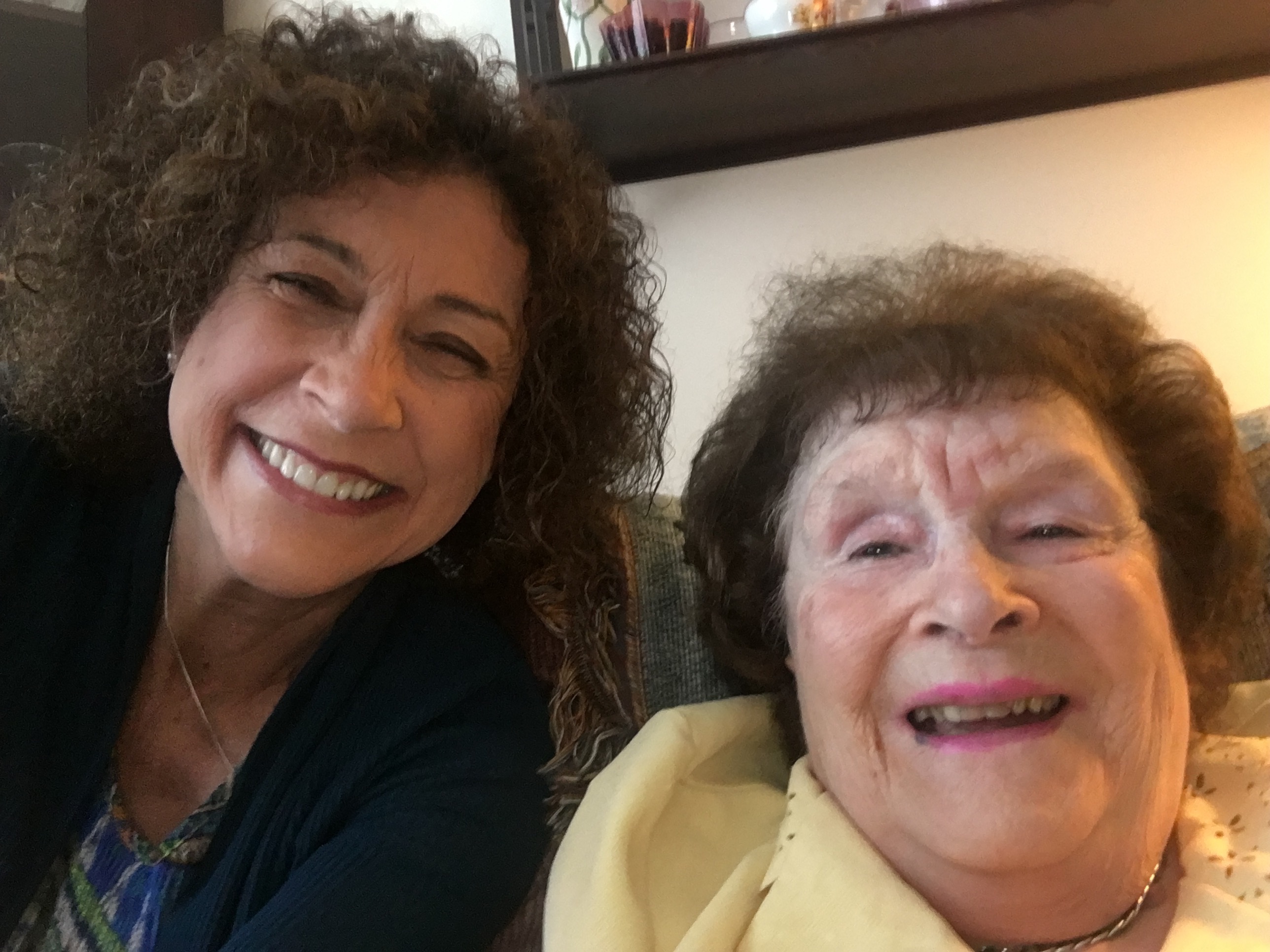
Last week I saw my parents for the first time.

The day began with the hymn Be Thou My Vision running through my mind. The tune stayed with me as I drove from Cincinnati to Lexington, Kentucky. I traveled with equal parts hope and fear, carrying with me the difficult memories of a painful business meeting the night before. I had no margin.

I arrived at the apartment building and walked down the long hallway, breathing deeply. The door to the living room was open. Mom was seated in her recliner and Dad was in the kitchen getting her some ice water. They both looked up, puzzled. Dad asked, “Now, who are you?” I said, “It’s your child Dad, it’s your second born.” He asked again and I answered, “It’s me, Paula.” Dad said, “Oh my!” I walked to where Mom was seated and she asked Dad, “Who is this?” I answered, “It’s your child, Mom. It’s your second born. It’s Paula.” With a confused look she asked again, “Who?” and I answered, “Paula.”

With that she reached out her arms and said, “Come give your mother a hug.” As I bent down she proceeded to tell me about my birth, which was more than a little odd. I realized this was her prepared agenda. She was going to let me know that she had been there and I had been born a boy. But Mom had a hard time staying with her agenda. It was clearly a woman in her living room, and the obvious beat out the theoretical.

Dad sat down and said, “Well, you do not look at all like I thought you might.” I could tell he was pleased I did not look like a man in a dress. It made it easier for both of them to understand the fundamental truth – their son is a woman.

For the next three and a half hours the conversation did not stop. There were tears and much laughter. I thanked my parents for what they brought into my life, and expressed my gratitude that they had allowed me to visit. There were difficult moments. With tears in his eyes Dad asked, “Why do you believe you are a woman?” He listened intently as I explained why people are transgender. This 93-year-old man expressed far more openness and understanding than many fundamentalists one-third his age. Most evangelicals come at the subject self-referentially. “Look what you did to me.” They almost never ask about the pain I must have suffered for all those years. It’s all about their shock and dismay. Dad had moved beyond that. He wanted to be sure he understood every single word I said. His openness warmed my heart.

Mom made a few half-hearted attempts to return to her agenda but she couldn’t help herself. When I remarked on my affection for the cups and saucers on the shelf, she said to Dad, “Well Dave, she wants some of those cups and saucers. I told her to mark the ones she wants with her name.” Every time she referred to me in the third person, she correctly gendered me. It was obvious a female was in her presence, and she responded accordingly.

I had a chance to tell both of my parents what I appreciated about them. I thanked Dad for his gentleness, kindness, love, patience, steadfastness and loyalty. I thanked Mom for her tenacity, intelligence, sense of humor and intellectual curiosity. As our time together wound down, Mom said, “Well my lands, I don’t think I’ve had this many compliments in years.”

At one point deep into the conversation I asked my parents why they had decided to see me. Mom playfully said, “Well, I’ve heard it said that sometimes people die in their 90s, so I figured we’d better get together.” Through tears Dad said, “I was afraid we would never see you again.”

I gingerly stepped behind their chairs to position myself for pictures. Then I prepared to leave. I gave Mom a long hug and whispered that I loved her. Mom rarely ever said to me, “I love you.” She always stuck with the less emphatic “Love you.” This time Mom said, “I love you.”

I hugged Dad for the longest time and we both cried. He too said, “I love you,” not words I often heard from my father. I told them I’d be back in a couple of months and look forward to seeing them again.

As I walked down the hallway I kept saying, “Breathe Paula, breathe.” After an enjoyable first visit with my brother (I’ll write about that another time) I headed to my cousin Jane’s home in Richmond. She and John greeted me with quiche and salad and snicker doodles and Jane cried with me late into the evening.

I wrote my friend Christy and thanked her for reminding me that loving is best, even when it is not reciprocated, because you never know when God might change a heart, sometimes even yours.
Through the Basement Window

Through the Basement Window

Do you ever notice those squiggly lines in front of your eyes? Of course you do. We all have them. Their technical name abbreviates to DVS, but most of us just call them floaters. You get more floaters as you age. Have you noticed you cannot focus on a floater? As soon as you try to focus on a floater, it disappears.

Cleopas and his companion had traveled to Jerusalem from Emmaus, hearing there was hope in the person of Jesus of Nazareth. But when they arrived all they found was pain and turmoil and a bloodied cross. So they waited until morning and began walking the seven dusty miles back home.

We have all been on the road to Emmaus. It’s the heavy-hearted walk down the courthouse steps after your divorce has been finalized. It is the drive home from the cemetery. It is the pillow soaked with tears because you just can’t pull yourself out of bed. We have all been on the road to Emmaus.

A stranger began walking with them. He appeared unaware of the awful spectacle they had witnessed, but the longer he spoke the more they listened, and when they got home they invited him to dinner.

The stranger gave the blessing and when Cleopas and his friend opened their eyes, they saw the Lord of the universe. But as soon as they realized the truth, like a floater, Jesus was gone.

For me, God rarely arrives through the front door. I hear the doorbell, but when I pull the door open all I see is empty space. I do not have eyes to see.  God has to come in more subtle ways, often through the basement window. She comes into the dark places first and works her way up through the house.

When I first wake up I am usually humming a tune. Most of the time it is a hymn, (though this morning it was a Christmas song, the only phrase of which I ever remember is, “like Currier and Ives.” Go figure.) But like I said, my waking song is usually a hymn, rich in imagery and redolent with emotion, something like, “When peace like a river attendeth my way, and sorrows like sea billows roll.”

Sometimes the hymn will bring to mind a pleasant dream, sometimes a nightmare. Occasionally a message will accompany the dream, though most of the time not. Still, the waking hymn feels like a message of sorts, preparing the way for more.

God tiptoes up from the basement and onto the main floor in the form of rebel pilgrims with warm smiles and welcoming hearts. Yesterday I met for lunch with one of my dearest friends. Within a minute or two we were both in tears and the sweetest waitress asked, “Aw, everything okay?” My friend answered, “Yeah, you know, this is a safe space.” I felt God’s presence at that moment, the Supreme Wise Relationship. She had arrived at our table in Proto’s, with our medium pizza with capers and kalamata olives and mozzarella. She spoke with wisdom beyond anything either one of us holds on her own. She smiled a lot, this Mother God who made her way up from the basement.

Later in the day, after riding Picture Rock Trail and stopping at the stone table on the way down, my eyes were drawn to the northwest, where God had painted the sky in hues of pink, orange and blue. She had climbed on up to the heavens, this God of wonder, always on the move. She will come back in the morning, between the notes of another hymn, and on the road to Emmaus all manner of things shall be well.

And so it goes.


To Meet or Not To Meet

To Meet or Not To Meet

(I began writing this post a month ago, before the news emerged that our vice-president will not meet alone with a woman other than his wife.  The news reinforced my resolve to finish this post.) 

Not long after transitioning I met with one of my longtime friends, a megachurch senior pastor.  The day we met he told me he was actually breaking one of the rules of his congregation.  A pastor was not to meet alone with a woman, regardless of the venue.  He had told one of his staff members that our meeting was going to take place, and under the circumstances they decided it would be acceptable.  I wasn’t sure how I felt about being an exception, but I did enjoy the day.

For decades many megachurches have had a similar policy.  In my previous life I didn’t much think about it, just like I didn’t much think about a lot of issues that mattered – really mattered.  Now, the policy makes me mad as hell.

As a woman, I do not have the access to a male pastor that is freely available to any male.  Another megachurch pastor from my past recently told me he would like to visit, but said he would not meet alone.  I do not want anyone else involved in the conversation.  But apparently, church policy is church policy.

Well folks, that policy is wrong.  Women are being asked to sacrifice access to their pastors because pastors need to “avoid any suggestion of impropriety.”  Creating different rules for meetings with men and meetings with women is itself impropriety! The only place in the Western world in which that kind of thinking still survives is within the evangelical bubble.

Thousands of female executives, board members and corporate officers attend evangelical churches every week.  They all tolerate the fact that they cannot serve in leadership in those churches.  They also tolerate the policy that says they are not allowed to meet alone with male pastors.  But how long do you think that tolerance is going to last?  I’d venture it will last about as long as the Baby Boomers last, and not one day longer.

Millennials are a different breed.  Fifty-one percent of Millennial evangelicals are supportive of marriage equality. According to a 2012 Pew Research Study, Millennials rarely consider gender in their work-related decisions.  They have turned traditional views of gender upside down.  Thirty-four percent of Millennial women aspire to be bosses, while only 24 percent of Millennial males aspire to leadership positions.  How long do you think those born after 1980 are going to put up with these male-dominated evangelical assumptions?

I have been a pastoral counselor since before I transitioned from Paul to Paula.  At the time of my transition all of my clients were Millennials, and most were Christians with an evangelical background.  Do you know how many of those clients I lost when I transitioned?  None.  Not one.  They all remained.  That tells you something about how Millennials view gender.

Baby Boomers do not seem to understand that to Millennials, the notion that a woman cannot meet alone with a male pastor feels as ridiculous as a male psychotherapist who refuses to meet alone with female clients.  If male pastors are concerned about impropriety, they should do the same thing psychotherapists do, become educated about how to handle it, so the risks can be minimized for all involved.

In the church, forbidding such meetings is seen as an easier solution, because apparently it is not important for women to have individual access to their pastors.  That attitude is dismissive, sexist and misguided.  If what Mike Pence and evangelical churches are trying to do is avoid the appearance of impropriety, they are looking backwards, not forwards.  It won’t be the first time the church has found itself in a backward facing position.  Prejudice of every kind always looks awful in a rearview mirror.

As for my inability to meet alone with male evangelical pastors, I cannot say I am all that bothered.  The truth is I’d rather meet with women anyway.

And so it goes.

The Truth and Nothing But The Truth, So Help Me God

The Truth and Nothing But The Truth, So Help Me God

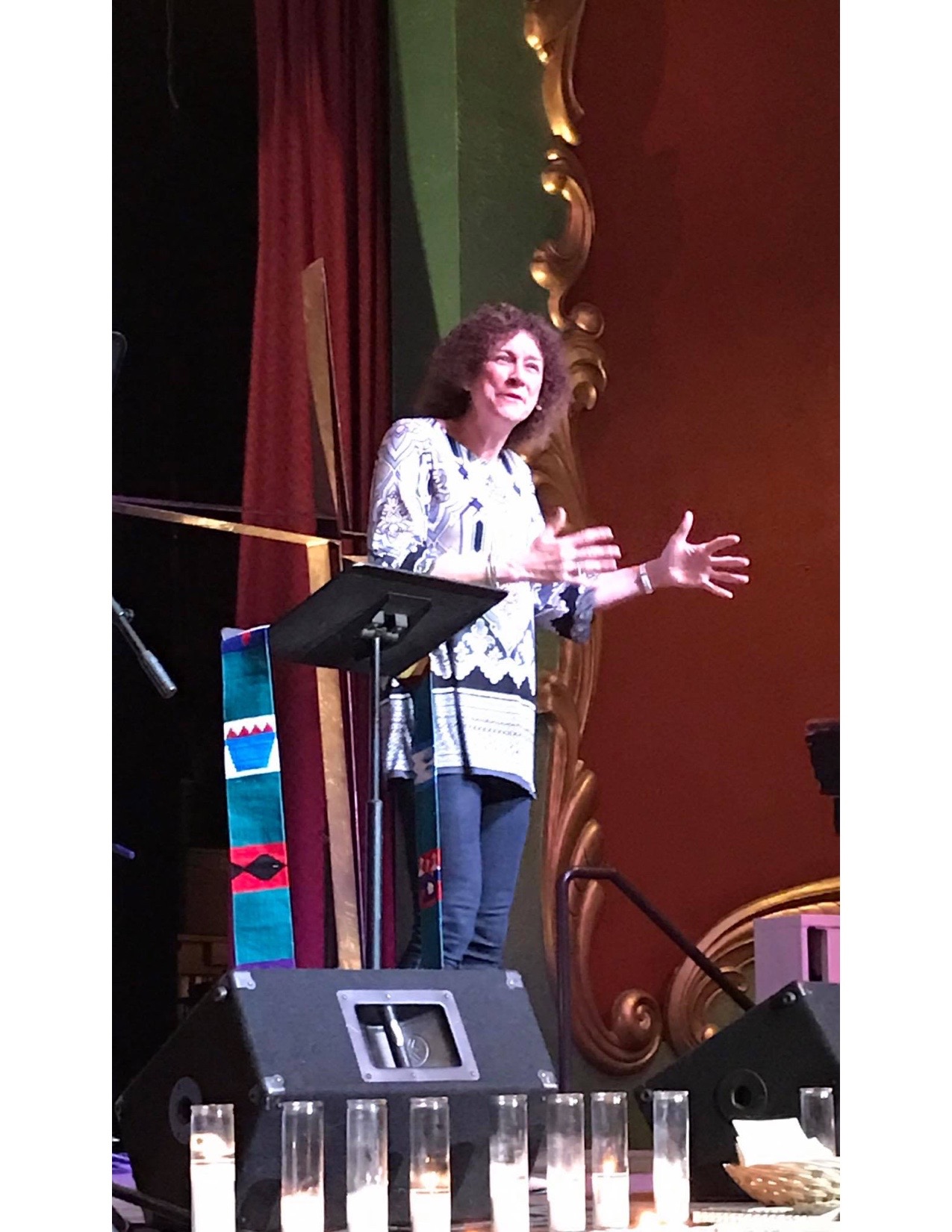
This past Sunday I preached at Highlands Church in Denver.  We are in a Lenten series on suffering, and I was speaking on God’s perspective on power.  We have two worship services.  This Sunday the worship was so meaningful I wanted a third service, just to hear the music one more time.  Except I’m not sure I would have had the energy to preach a third time.  I left it all out there, and when the second service was over, I was spent.

I have always loved preaching, but since I became me, my preaching has changed.  As the privileged white male slowly becomes the person now emerging, my preaching is less from my head and more from my heart.  More than that, there is filtering through my life an awareness previously missing.  I have lived a privileged life, and I will not live long enough to totally lose that privilege.  I do not want to preach as an expert.  I want to preach as a searching fellow-traveler.

As a white male evangelical leader, it was easy for me to become theologically smug.  I believed I understood the truth and spoke it with confidence.  What was lacking was an awareness of the insularity of my tidy world.  I was not alone in this self-referential bubble.  Lots of my male friends and co-workers dwelled within the same castle walls.  We all had a bit too much confidence in our grasp of the truth.

The other day I heard about a megachurch senior pastor who recently preached on the importance of truth.  My friends tell me he used me as an illustration of someone who has departed from the truth.  While he did not call me by name, they said it was pretty obvious about whom he was speaking.

I know this pastor to be a good man, thoughtful and caring.  He wants to get it right.  He believes in the truth, and confidently preaches his understanding of it.  I know how he feels.  I once lived there.  But I did not know how much the notion of propositional truth is a conversation dominated by a privileged few, a debate mostly among men who believe their perspective is the most objective take on the true nature of things.

There is no such thing as objective truth.  There is truth, but it is always subjectively received.  The best we can hope for is to get as close to objective truth as is humanly possible.  To do that we must open our understanding to rigorous cross-examination, looking at truth from multiple perspectives, not just the perspective of the dominant culture.

When it comes to religious truth, I believe that truth, devoid of flesh, is little more than a cold and broken hallelujah.  Propositional truth does not have arms and legs and a beating heart with which to hold a fragile soul.  It is not incarnational.  It does not bleed, or give birth to children, or sweat and cry.  The search for religious truth is too often an esoteric conversation limited to those whose lives are comfortable enough to allow them the luxury of contemplating the notion of spiritual truth, inerrantly received.

This week I watched the movie, The Shack.  I had heard from a few men that the movie was terrible.  It was not.  The movie was wonderful, a touching depiction of the Trinity, much in the vein of what Richard Rohr describes in The Divine Dance.  I cried from the moment Jesus appeared on screen to the end of the movie.

I thought I might write about The Shack and looked on the Internet for the writer of the adapted screenplay.  I discovered most of the Google references to the movie were evangelical diatribes written by white men.  All railed against a “dangerous, heretical film.”  Seriously?  Octavia Spencer as an approximation of an all-loving God?  A wispy Asian woman as an approximation of the Holy Spirit?  A Jesus whose guiding principle is unconditional love?  Yep, that sounds dangerous to me?

Some criticized the movie’s simplicity, and while I understand their critique, I do not agree.  The movie was not targeting the rational left-brains of confident men.  The Shack is a movie of the heart.  It is about suffering as we actually experience it, with anger, despair and hopelessness.  It is a movie about the triumph of wisdom and love.  I have spoken with three other women who have seen The Shack.  We all cried, hard.  The guys I know who’ve seen it?  Well, most of them found the movie lacking.

Truth does not abide within the walls of the rational mind.  It permeates all of life, and it is messy.  The truth is hard to tell and the truth is hard to tell.  It is both difficult to discern and difficult to speak.  I do believe the truth will set us free, but I also believe getting there involves a lot of soul searching that is as much a matter of the heart as it is a matter of the head.  As Pascal wrote, “The heart has its reasons that reason does not know.”

Which brings me back to my preaching and the accusation from the megachurch pastor.  Have I abandoned truth?  I invite you to check out last Sunday’s sermon.  http://www.highlandschurchdenver.org/audio/weeklysermon/  Some of you will say, “Yes, that is, in fact, someone who has abandoned the truth.”  Others will likely hear a woman beginning to understand things she never understood before.

Or, if you don’t have 22 minutes, take my word for it.  My heart yearns for the truth, but I hold lightly to my grasp of it.

And so it goes.


I Understand Your Pain, But…

I Understand Your Pain, But…

I have noticed a phenomenon for which I have no name. It occurs when people from my old evangelical tribe contact me in good faith, but feel compelled to tell me how much it pains them to hear others speak evil of me, something that still happens with regularity. I understand their messages are well intended, but something strikes me as irregular.

As a pastoral counselor, I always ask a question of myself when I think about sharing personal information with one of my clients. Am I sharing the information for my client’s sake or for mine? As a counselor, if it is for the client’s sake I go ahead and speak. If it is for my sake, I put the thought away, unexpressed.

Over the past few months I have taken to asking a similar question to those who write and tell me of the pain they feel when others speak ill of me. I ask if they are telling me for my sake or for theirs. I suggest if they are telling me for their own sake, that is one thing. If they are telling me for my sake, I let them know it is just one more piece of flying debris from a storm I have left behind.

What I have come to understand is that those who bring these messages are often not fully aware just how much their experience is shaped by living almost exclusively within a heteronormative tribe. By placing themselves in a culture in which prejudice against my community is the norm, they assume I am going to be as bothered by what they hear as they are. I am not.

These friends remain in a world in which transgender people are seen as an anomaly or worse, an abomination.  They do not fully understand that I inhabit a different universe. I live in a world that deeply respects the decision I have made, and sees me as a person of courage.  I am part of a church and a movement of churches that is more vibrant than the one from which I was ostracized.

I chose to move into a world that is broadly accepting.  My family has also chosen to leave the old world and enter a new one that includes a majority of our fellow citizens. Sixty-two percent of Americans are now supportive of the LGBTQ community. Fifty-one percent of millennial evangelicals are supportive. Even among older evangelicals the number supportive of marriage equality has increased from 26 percent to 36 percent in just eight years.

It is okay if my evangelical friends want to remain in a culture that believes I have gone astray, and I do appreciate that these good folks are supportive of me. But I no longer need them to be my advocates within a tribe in which I am persona non grata. If it pains them to hear nasty things about me, I would suggest they do not speak up in my defense, or better yet, consider moving on.

Christ is alive and well outside of the insular cultures intent on vilifying a group of healthy and whole followers of Christ. There is a big Christian world out there beyond the heteronormative evangelical culture. I moved into a more inclusive Christian world and found it transformative.  The Christ in me is now more readily visible than it was before. Is it possible the same would be true for others?


A Little Too Close to Home

A Little Too Close to Home

I flew home from Orlando last Sunday. The flight was delayed and the boarding area was packed. We were flying on an A330, a wide-body usually reserved for international flights. As I stood in line to board, a transgender woman came pushing through the crowd, pulling a wheelchair stacked with an assortment of pink and purple bags, including a Hello Kitty backpack that looked as though it had been drug through the Amazon.

The trans woman demanded to board early, and wheelchair in hand, somehow managed to board with the wheelchair passengers. When she was forced to consolidate her bags at the end of the jet way, she huffed and puffed and blocked the door as she dramatically stuffed her bags into one another until they resembled a misshapen Russian doll.

My fellow traveler looked to be in her 40s, with short black hair, a heavy beard showing through her makeup, and a barrel-chested frame, which she had chosen to squeeze into a tight mini-dress. As she boarded, the flight attendants exchanged amused glances. She turned right and headed to her coach seat while I turned left into first class.

As I sank into my cozy pod by the window, I thanked my lucky stars that I was not like her. The flight attendants made a few remarks about her that were lacking in generosity, then one turned to me and respectfully asked if I would like a pre-departure drink. They were clueless I was transgender. I thought again, “I am so fortunate I am nothing like her.”

But I am – like her. We are both transgender women.  And we are both human.

I have my fair share of transphobia. I do not like to encounter trans women who, in my opinion, reflect poorly on our community. Truth be told, I do not have much of an issue not identifying with an able-bodied passenger who demands early boarding and complains when she is expected to follow the rules that apply to everyone. That’s just rude. But of course that was not the main thing bothering me. I was primarily reacting to the way she looked. She looked like the kind of picture a right-wing bigot puts on social media to justify HB-2. “Do you want this person in the bathroom with your daughter?”

As you can imagine, by the time my flight arrived in Charlotte I was in full reflection mode. Who did I think I was? How could I think I was better than this woman?  So, I waited for her to get off the plane and struck up a conversation, right? No, I did not. Because on that particular day, I just did not have it in me.

I do not turn down any speaking engagements about transgender issues, whatever the venue. I am a strong woman, and I can blaze a trail with resources not available to other transgender individuals. I can take it. It is my calling. And yet…

When I have lunch with someone from my old world, I watch as they look around, afraid it will be obvious they are having lunch with a social pariah. Every week I still get letters, blog comments, and Facebook messages telling me I am an abomination. At almost every church presentation there is at least one pejorative question I am required to handle with grace.

I am tired and weary, and sometimes I do not have it in me to reach out to steady the journey of another. And that is the grace I needed to give myself on that particular day. Another day I will find the strength to reach out, but on that Sunday, I just didn’t have it.

On my connecting flight to Denver I prayed a simple prayer.   “Lord, strengthen me toward generosity when my own transphobia hits too close to home.”

And so it goes.

Thoughts Turning Toward Home

Thoughts Turning Toward Home

I’ve been reading an excellent novel my son recommended, A Doubter’s Almanac, by Ethan Canin. The book has bent my thoughts toward family. My father turned 93 in January. Dad held exactly four pastorates in his long career, each roughly twice as long as the one before. He was a pastor’s pastor.

I saw my father as deeply good, though never as a powerful man. He was too kind to be seen as powerful. When he was well into his 80s I asked his opinion about the afterlife. He answered, “Well, I hope God lets me into heaven.” I assured him, “Dad, if you aren’t getting into heaven, I don’t think there’s much hope for any of us.” Though he feared God as the ultimate disciplinarian, Dad was invariably gracious toward others.

The last time I visited my father was on his 90th birthday. It was one of the final times I traveled as Paul. I had already lost my job, though I had not informed him. When I told my father a few months later that I was transgender, he said, “This doesn’t change how we feel about you one tiny bit.” Once he began to understand what that meant, his struggle became monumental.

Having lived his entire existence in the evangelical subculture, Dad has never been well versed in the ways of the world. After my revelation, I imagine he called his two physician friends. Being men of my father’s generation, they themselves probably did not understand much about what it means to be transgender, but I am sure they were gentle and supportive.

Once my mother began to understand what I was telling her, she demanded that her subject behave properly. She had a tendency to overestimate her power. When Mom realized I was definitely transitioning, she thought she could keep my transition a secret. She is unaware of the reach of social media.

My mother gave me my intelligence, quite a generous gift really. She ingrained in me a love of books and kept close watch over my studies. Mom had a quick sense of humor, though she rarely gave herself permission to use it. I am afraid she was hindered by her religion, her geography and her times. I have compassion for my mother. I always looked like her. Now I really look like her. I don’t mind.

After a few tense years of precious little contact other than the occasional letter, I called my father on his birthday. It took him a few minutes to understand with whom he was speaking. He said, “You don’t sound the same.” I replied, “No Dad, I don’t. I’m Paula now, and Paula does not sound like Paul.” Dad mused, “Well, I suppose that would be true.” I was sitting alone in a nearly empty Marriott Hotel restaurant in Phoenix and my tears dropped onto the linen tablecloth.

I am going to visit my parents next month. I will also meet my brother for the first time. The writer Mitch Albom said, “Sticking with your family is what makes it a family.”

The Bible does not tell us much about the family of Jesus. We know on one occasion his siblings were more than a little embarrassed and tried to bring him home. He probably always seemed “other” to them. As far as we know, Mary was the only one who stayed close all the way through the crucifixion. When Jesus motioned to John and said to his mother, “Behold your son,” he might as well have been saying, “Well, now maybe you can have a son you can understand.”

I had hoped to hold off transitioning until my parents were gone. I wanted to spare them the pain. But in these life and death matters we do not always have good choices.

In case you are curious, unless I choose to show it to them, my parents will not read this post. They do not go online, nor does anyone read my blog to them. Most of their friends do not approve of me. I am an outsider and there are limits to fundamentalist generosity. I hold no animosity.

I hope my visit with my parents goes well. No one said this would be an easy journey.

The End of the Evangelical Era

The End of the Evangelical Era

Last week the Trump administration rolled back rights for transgender children. Trans kids already have a suicide attempt rate thirteen times higher than their peers.  Now they will be in even greater peril. The opponents of transgender rights fought to overturn Obama’s order because their own children, not in any particular kind of danger, might have been made a little uncomfortable by having a transgender child in their bathroom.

As if the decision itself was not bad enough, evangelicals on Facebook raised their collective fists in triumph. When informed of the suicide risk of these perpetually bullied children, they responded with a shrug.

This evangelical triumphalism convinces me we are at the end of the reign of evangelicals. When a tribe votes for a misogynist who makes vile comments about women, then proclaims victory when vulnerable children are made more vulnerable, its days are numbered.

Viewing the Bible as a constitution has been in vogue within conservative Christendom for centuries. But with the arrival of Quantum Physics and the end of the modern age, the traditional evangelical worldview no longer holds. Treating a book written over thousands of years by scores of authors as though it was the ultimate rule book is not sustainable in these postmodern times. That form of Christianity will remain popular with a few, but most of the world has moved on.

As Brian McLaren and Richard Rohr suggest, Christianity is shifting from being seen as a set of beliefs to being practiced as a way of life. It is moving from God as the purveyor of divine punishment to God as the ultimate suffering participant. It is transitioning from the church as a tribe organized for its own protection, to a community organizing for the common good.

The fact that 81 percent of conservative evangelicals voted for Trump shows how desperate they are to hold on to political power. Any change from the socially progressive Obama administration was better than admitting what they already know, that white evangelicalism’s days are numbered. The reason is embedded in the evangelical community’s own bankruptcy on issues related to social justice.

Black lives do matter. LGBTQ people do deserve equal rights. Women do deserve equal opportunities (including in ministry) and equal pay. Immigrants deserve to be treated with respect and refugees should be welcomed. Any tribe that denies these rights does not deserve political power. Millennial evangelicals understand this and have rejected the social conservatism of their parents. Fifty-one percent are supportive of marriage equality.

I believe in the church more than ever. I don’t mean the church that voted en masse for Donald Trump. I mean the church as exhibited in progressive churches from an evangelical background, like Forefront Church in New York, Sojourn Grace in San Diego, One Church in Phoenix, Highlands Church in Denver, EastLake Church in Seattle, LaSalle Street Church in Chicago, and Gracepointe Church in Nashville. The same spirit is also evident in the ministries of Sojourners, the Gay Christian Network, the Reformation Project, and other progressive ministries. All are important efforts in the drive to return Christianity to its rightful place as a ministry of reconciliation.

I believe the church is more important than ever. I believe the message of Christ’s love is as relevant today as it was in the time of Christ. I believe in the power of the Gospel. It is the best chance we have to turn from our dangerously destructive tribal behavior.

These are unprecedented times. Our current president and those he has brought into his inner circle have embraced the antithesis of the Christian message. The machinations that evangelicals have gone through to justify their support of this destructive administration will not prevail. Tyrants fall, often mortally wounded by their own egos.

The evangelical church has traded its soul for a bowl of political porridge. Until they return to the primacy of unconditional love, the generosity of grace, and the exhibition of mercy, they will remain a sad caricature of their former selves.

And so it goes.

images-1

Keeping the Conversation Alive

Keeping the Coversation Alive

These are frightening times in our increasingly dichotomous America. Having aligned itself on one side of the divide, the evangelical church is not doing much to bring us together. In this most recent election, 81 percent of evangelicals voted for the Republican presidential candidate. According to a Pew Research study released last week, 76 percent are supportive of the president’s executive order banning immigration from seven primarily Muslim nations. Evangelicals have shifted to the right.

I attend a church with an ethos of tolerance. “Conservative or liberal here, we’ve all got to give a little here,” is one of the lines of the Highlands ethos, which we read every Sunday.  Just a few weeks ago one of our co-pastors preached a sermon some saw as leaning politically left. While I did not agree with that assessment, I was impressed with how our leaders responded. Just two weeks later our founding pastor shared the pulpit with a member who was unhappy with the previous sermon. While their joint message was not itself without controversy, I was pleased our co-pastors were willing to enter troubled waters in an attempt to live out our ethos. Mistaking uniformity for unity, most evangelical churches never present both sides of an issue.

Without a full-throated loyal opposition, how can iron sharpen iron? How can we be sure our theology is not so inbred that new perspectives never see the light of day? If our church is all white, how can we understand the lives of people of color? Those from the majority culture often say, “I don’t have a prejudiced bone in my body!”  They do not think they are prejudiced because they rarely place themselves in an environment in which anyone challenges their perspective.

I believe the evangelical church has gotten itself into this monochromatic mess by its long history of domination by men, specifically white men. When that male control arises from what is believed to be a biblical endorsement, it creates an arrogance that is pernicious. God’s supposed preference for male leadership has allowed untold prejudice to thrive without challenge. The result is an evangelical world tone deaf to the voices of women and minorities.

I am truly embarrassed I did not see how complicit I was in enabling such a slanted worldview. But I was too comfortable in my privileged position. There is no excuse for not making more of an effort to understand what life is like “on the other side.”

Understanding the other side is one of the most important tasks of any privileged culture. That is one of the reasons I now find it important to understand those who voted differently than I did in the election. One of my biggest lessons is the realization that I do not know America. If I am not going to add fuel to a fire already burning too hot, I must get to know this nation anew.

My first act was to buy a copy of Hillbilly Elegy, the book by J.D. Vance about growing up in poor white Scots-Irish Appalachia. His stories resonate because I grew up in Scots-Irish Appalachcia. These were the teens who voted me Most Likely to Succeed in my senior year of high school. They are also the people who strongly suggested, after I became Paula, that I not attend my high school reunion. They are not fickle, just resistant to change.

I want to understand the anger and frustration of those who feel left behind and are disadvantaged through no real fault of their own. At one time I was one with these fellow citizens. Now I am other. I am socio-economically other, professionally other, and other-gendered. I am a threat to their tribe. I am an outsider, and outsiders are to be feared. It is important for me to understand that fear and not increase it unnecessarily.

I say unnecessarily because I do believe the truth matters, and there are times when one must speak. Much of the fear I see in today’s evangelicalism is not based on fact. In this age of multiple news outlets, there are many who do not hold truth in high regard. Infowars is a site with over eight million unique viewers and 1.8 billion page views. It is also the program that denied the reality of the Sandy Hook school shootings and claimed 9/11 was an “inside job.” In other words, Infowars is apparently more interested in conspiracy theories than it is in the truth. What they report is verifiably not the truth. I have a friend who once was a teacher in Sandy Hook. She taught the parents of some of the students who were killed. Try telling her that Sandy Hook never happened.

When it comes to big government or small government, there is plenty of room for differences of opinion. But when it comes to the facts, there is not much room for discussion. The truth matters. Speaking the truth is essential. The spirit in which one speaks truth is also critical. Does it open doors or slam them shut?

I will keep reading and listening and doing my best to be a part of the solution to the rift that divides our nation. I will speak up for the truth, and what I believe to be my responsibility to rightly interpret scripture as it applies to today’s salient issues. When I disagree, I hope I remain focused on topics and not personalities. These are trying times, and now, more than ever, we must unite on the knowledge that the truth sets us free.

And so it goes.

images

All About Me

All About Me

I spoke to an appreciative audience at a respected national conference. I received a standing ovation and heard the accolades of hundreds. I listened as attendees, eyes filled with tears, thanked me for speaking a word on their behalf. You’d think that would be enough to fill the fuel tanks of my ego, right? Yeah, think again.

The day after my keynote speech I was talking with two other main speakers. I thanked one for her authenticity and the integrity of her message. I thanked another for the trail he blazed for all of us who live among the publicly vilified. As the delightful conversation unfolded, I found an old discomfort creeping into the pit of my stomach. It was not joy or gratitude. No, it was disappointment that one of the two speakers had not affirmed my message.

Later in the conversation the speaker did say, “Your message was terrific!” but by then I was feeling too guilty to take in the compliment. I wanted to stand outside my own self, point and say, “I’m not with her. She’s a bottomless pit of need for affirmation. Keep your distance. She could suck your soul dry.”

How could a 52-year-old woman (yeah 52 – that’s what the computer typed so I’m stickin’ with it) who had just received the most extraordinary response of her career, stand in need of more affirmation?

Richard Rohr says in the second half of life we finally come to the place in which we find our deepest sense of satisfaction from deep within our own soul, not from the affirmation of others. So, uh, am I not yet in the second half of life? I’m well into the second half of my life yet here I stand, still hoping my Nielson ratings are holding. I feel like the narcissist who says, “Well, enough about me. What do you think about me?”

In our deep spaces we all want to be adored. If only we could truly grasp the truth that we already are. But alas, we have a difficult time seeing beyond the frosted lenses of our own wounded eyes.

The public platform is a vulnerable place to stand. Americans consistently say their greatest fear is speaking in public. On your better days you find the courage to place yourself there because you believe you have a word that must be spoken. On your lesser days you realize you are standing there because you have an ego in need of affirmation.  Better days and lesser days will always be with us.

I shall speak again, and of one thing I can be certain. Should Jesus himself come up afterwards and say, “Paula, my dear child, I love you!” my response will likely be, “Yeah, but did you like my message?”

And so it goes.

Naked model kissing herself in a mirror under mistletoe isolated on white