Hope Rising

Hope Rising

On Sunday I spent three hours with a photographer from the New York Times. He came to take a zillion pictures, one or two of which will appear along with an article in the Times later this month. He was a delightful young man with loads of talent. He was also pleased the Times recently doubled its day rate for photographers.

The newspaper was able do so because people are reading newspapers again, particularly the New York Times and the Washington Post, two papers taking the lead in the investigative journalism necessary in these tumultuous times. Americans care. We are alarmed, and we want to know the truth. Hundreds of millions still believe the truth matters, and whether it is tomorrow or ten years from now, the truth will set us free. Signs of hope abound.

As of Monday, over 200 mayors, three governors, 80 university presidents and 100 corporations have pledged their allegiance to the Paris Agreement, with numbers increasing daily.

There have been protests on 43 different days since the inauguration, including the Women’s March on January 21, when over 3.5 million peaceful marchers conducted the largest protest in American history. Almost all of the protests have been born out of the desire for America to be more thoughtful, more egalitarian, more concerned for racial and socio-economic justice, more protective of the planet, and more devoted to a just and generous expression of democracy.  Most have been led by women.

For me, there was a watershed moment when I moved from despair toward hope.  It was when Sally Yates testified to the truth, showing the members of Congress what a woman without fear can do.  That is when I saw hope rising.

Passion for justice has been stirred. Women are taking their rightful place in leadership, knowing the men have had their chance and have blown it. They are working collaboratively, as women do, nurturing this fragile planet and all of its endangered residents. They fight as protectors of life and purveyors of hope. They know it is their time.

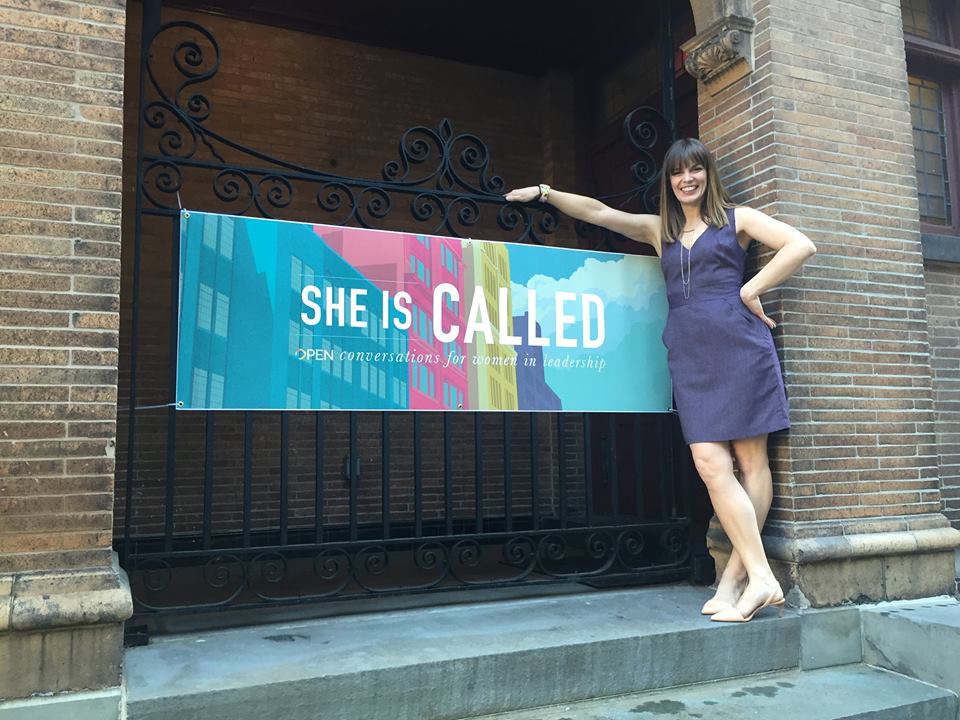
I stand, primarily as an outsider, watching the women around me rise as great fires burn within. They are people like my friend Jen Jepsen, whose birthday yesterday set me to writing this post.  I write in celebration of her great passion.  I also think of Cathy, Jael, Jana, Jubi, Christy, Jenny, Rachael, the women at the She Is Called conference in New York, and all the other strong women who give me such hope.

These are the women who are thinking of their children and grandchildren, and the children of their grandchildren. They know pain precedes life, and it does not frighten them. They will bear the pain and lead us to recover our humanity, to reconcile the races and heal the nations. They will teach us to nurture the planet, not exploit it. They will bring life, not take it.  I see it happening in real time.  It is like watching Sally Yate’s testimony all over again, and I want to break out in applause.

Women were taught to stay in their place, which is to say far from positions of power.  Today they are discarding those stale messages, empowering one another and taking the reins of leadership.  Yes, hallelujah, even in the church, the last remaining bastion of pure male privilege.

I have no doubt who holds the future.  It is the women, especially the mothers.  I see the fire in their eyes, the confidence in their groundedness and the fierceness in their determination.  Their leadership can and will take root.  These are the last days of narcissistic, egotistical, win/lose male domination.  What we see in the corridors of power are the last gasps of a spent ethic.

Through women rising, a world of fierce empowered love is emerging, and I for one, believe it is just in time.

And so it goes.

Hope Flowing Through Words

Hope Flowing Through Words

This week, while purging my computer of unneeded files, I came across a “making of” documentary about a television show of which I was an executive producer back in 2003.  I had not seen the show in over a decade.  It unearthed emotions.

As I have chronicled my journey from Paul to Paula, I have promised to be honest and authentic.  I have not talked much about my family, and I have edited a few nasty messages from the comments section, but outside of that I have written about the story as it has unfolded.  Lately the posts have been tough to write.  You might be tired of the hard ones.  I am.

This past week one of the human beings with whom I am closest said while they enjoy hanging with Paula, this whole thing has been brutal.  That word, brutal, is etched on my soul.  People who love me still suffer.

These people understand the life I was living was not sustainable. As one of them reminded me recently, “Trust me.  I was there.  You were not going to make it.”

For a long time, only three people knew what I faced.  They also know how close I came to losing my life.  All three have to remind me every now and again just how bad it was.  I used every ounce of energy I had keeping it together in my work and with my friends and acquaintances.  They had no idea anything was wrong.  That is because I saved my despair for when I got home, or for my therapist’s office, or phone calls with my close friend.  Those three knew that to save my own life, I would have to bring pain to others.  When it comes to gender dysphoria, there are no good choices.

Which brings me back to the television show.  As I watched Paul talk with the producers about making the show, and watched Paul explain to the crew how the show came to be, I missed the guy I saw on screen.  Like so many of you, I missed his sense of humor and calm confidence.  I missed his ease in front of a crowd.  I missed his voice.

Please understand, I do not miss living as Paul.  What had been a nuisance in my twenties and thirties became horribly difficult in my late forties and unbearable after that.  The pain accumulates.  But I miss what Paul was able to accomplish in the world, and who he was to his family and friends.

My family and friends lost so much, especially my family.  They lost friends and co-workers and even other family members.  In some ways, their losses were worse than mine.  And they never had a chance to memorialize Paul.  We often use the word “passing” when we refer to someone who has died.  In my case, passing is the word that best describes the loss of Paul.  Paul passed on and no one had a chance to publicly grieve.  Not my family, not my friends, not even me.

Early on I would have dismissed the idea of needing a memorial service for Paul.  “I’m still the same person!” I protested.  But watching that documentary, it is obvious I am not the same person, as most of my family and friends continually remind me.  Is it too late to publicly grieve?  I don’t know.  Nothing about this is easy, not for anybody.

So, how do we move forward?  Without grace, not well.  So I write in the hope grace will increase.  I write to light the fires of hope within.  I write to give voice to the pain felt by others.  I write so evangelicals will stop pretending life is not complicated and moral choices are easy.  I write so transgender souls a step or two behind me can navigate through this minefield with caution.  I write because I refuse to live in silence and fear.  I write to honor those who have dared to travel this rocky road with me.  I write because hope flows through words.

I write because I agree with the words of Emily Dickinson.   A  word is dead when it is said, some say.  I say it just begins to live that day.

And so it goes.


Prevailing Love

Prevailing Love

I want to thank you for your response to last week’s post.  My readership was about twice its normal size, and a number of you wrote personally to say if I ever happen to see you in an airport, I should introduce myself.  My heart was warmed.  I also appreciated the comments made on Facebook (Paula Stone Williams) and in the comment section of my blog.  If you’ve not read the blog comments, I’d encourage you to do so.

Since several of you have asked, I have not heard from the individual I saw at LaGuardia Airport.  I do not expect to.  I imagine it is a bridge too far.  It is all right.

Your encouragement has meant so much because I am tired.  Last week’s post was painful.  We are made for life-long community.  Our lives are knit together by the continuity of lifetime friendships.  They, along with family, are the thread that runs through our days.  For me, that thread was severed.  It is one of my greatest losses.  I knew it was likely to happen, but I did not realize how complete it would be.  Thousands of my old friends are gone, and it does not look like many will return.  Few remain who can testify of my previous life.

A quick Internet search of the ministries for which I once worked finds, with one notable exception, no acknowledgement I ever existed.  I hesitate to list my previous employers on my curriculum vitae because I know if they are contacted, they will probably not respond.  The same is true of the institutions that granted my degrees.  Sermons I preached that were once on video have been pulled from libraries.  I have been removed from public consciousness.  While not unexpected, it erases my past.

My new friends are wonderful, but they know little of my previous life.  Just today I was talking with one of my new friends who had no idea I was once the CEO of a religious non-profit, or the host of a national television show, or an editor and columnist for a magazine, or an adoption caseworker for 25 years.  That part of my life is not accessible to this new friend.  He only knows Paula, the woman who preaches at his church regularly and prays for people during weekly communion.   In some ways that is wonderful.  I no longer have to contend with people who come alongside because of what I can do for them.  The people who are drawn to me nowadays are not drawn to my accomplishments.  They just like hanging with Paula.

Many new friends expressed shock at seeing a picture of Paul in last week’s post.  Most found it difficult to find Paula in Paul.  Friends from my earlier life find it difficult to find Paul in Paula.  Only a handful see the same person in both photos.

This blog is one place that brings both halves of my life together.  Before I transitioned I decided to chronicle my journey, hoping it might bring understanding and insight to my evangelical friends.  I expected a few dozen might follow along.  I did not know it would be hundreds, then thousands.  For the most part, however, the people from my old life do not offer to come by for a visit.  Early on I would not have been able to receive them.  There were too many open wounds.  Today I would welcome their arrival, particularly if they brought their memories along for the ride.

Mine is a pioneering journey.  They are no well-worn ruts from previous processions of wagon trains.  I know of no other evangelical leader who has followed this particular call.  And I have done it very publicly.  I should not be surprised when mean-spirited correspondence still arrives, or that most remain silent because they do not know what to do.  It goes with the territory.  It is also the reason I am tired.

Which is why your encouragement has been so life-giving.  Nothing feeds a parched soul like a kind word.  Thank you, my friends, for trusting my character enough to walk through your discomfort to remain by my side.  I know it has not been easy, but you have allowed love to prevail, and that is how the light gets through to the dark places.

I am grateful for your love and acceptance.  Truly grateful.

And so it goes.

It Would Have Been Nice

It Would Have Been Nice

A couple of weeks ago I saw someone I love at LaGuardia airport, but we did not talk. The person came out of the bathroom just as I was walking by, our gates on opposite sides of the concourse. The person almost ran into me. My heart raced and was broken, all in a span of seconds.

I hurried to the American Admiral’s Club where I texted my close friend, Jen, who was waiting for her flight on another concourse. I wanted to take the shuttle over and find her. I needed a friend. Instead I read a David Whyte poem on my phone and wiped tears from my eyes.

I assumed I knew where the person was headed and I was correct, going to another city on another airline. As I walked toward my flight I glanced over at the presumed gate and there the person was, seated with a family member, waiting to board.

I used to be close to this person, respected the person’s intelligence and wit, and thoroughly enjoyed the time we spent together. Why didn’t I say hello? Because this person has not reached out to me since I came out. No email, phone call, card or note. I have not written the person either, and that is by design. When I have initiated contact with evangelicals from my previous life, it has not gone well. So I have learned to wait until they initiate contact with me.

I definitely no longer walk up and identify myself to any evangelical friends I see in an airport.  One former friend told a coworker he had seen me. The coworker complained to the leadership where I was headed to speak, considering it unacceptable that I should be permitted to address that particular audience.  (My experience with non-evangelical friends has been completely different.  But alas, most of my previous life was lived among evangelicals.)

On a flight from Phoenix a few months ago I sat next to a man with whom I frequently worked for a couple of decades. He had no clue he was speaking with me. He called me ma’am. The person in New York also had no idea it was me, and did not suspect I was anything other than the tall woman I am. The person looked straight at me without recognition.

It was difficult. I have lost much of the life of Paul. I have many wonderful new friends, some of the best friends of my life really, but they are people who never knew Paul. The number of long-time friends who speak as freely about Paul as they do about Paula can be counted on one hand.

The experience of my family and close friends is instructive. No one from an evangelical background talks with them about Paul. They share no memories, open no scrapbooks, and make no mention of the decades we spent together. It is as though Paul has died. When someone dies, people usually share memories. No one shares memories about Paul. They don’t know what to do, so they erase me from the narrative. When they are in contact with my friends and family, they speak of their previous life together, but they leave out the person who shared that life with them.

I hope you are not reading any anger into this post. I am not angry, just sad. I am sad it is so difficult for so many people. I am sad that with a few precious exceptions, the people from my previous life find it too hard to acknowledge both Paul and Paula.

There are a lot of people I loved when I was Paul, people like the person I saw at LaGuardia. It is painful to no longer be able to visit with those precious souls. And to actually be within inches of a person you love but unable to say, “Hey, what are you doing here? It is so, so good to see you!” That was awful. It was as though I had been split in two. It filled me with sorrow. When I got on the plane I thought of Carl Sandburg’s 1916 poem, The Limited:

I am riding on a limited express, one of the crack trains of the nation.   Hurtling across the prairie into blue haze and dark air go fifteen all-steel coaches holding a thousand people.  (All the coaches shall be scrap and rust and all the men and women laughing in the diners and sleepers shall pass to ashes.)  I ask a man in the smoker where he is going and he answers: “Omaha.”       

It seems such a tragedy that I saw someone I love, yet I did not feel I could speak. Life is short. We are not traveling to Omaha. We are traveling to the end of our days, and what is lost is lost.

And so it goes.

She Is Called

She Is Called

Last week I attended the She Is Called conference in New York City.  For three days female church leaders from across the nation met for inspiration and conversation. I led one discussion and gave the closing keynote address. Truth be told, with my decades of privilege and little understanding of the challenges these women face, I wasn’t sure I belonged at the conference. I had much to learn, but I was not so sure I had much to contribute.

On the first day, pastors of well-known mainline Protestant churches in New York and Chicago spoke of their ministries. Those sessions were followed by several conversations about issues unique to women in ministry, like unequal pay and juggling the responsibilities of work and home. The experiences of these women were very different from my experience in ministry. I was painfully aware of my privilege. I was actually a little relieved when a reporter from the New York Times arrived to interview me about a story the Times is doing this summer.

I am the recipient of decades of entitlement. These women had received decades of subtle and not so subtle messages that they would have to labor twice as hard for half as much. They talked of working while parenting in ways that were unknown to me. I thought I was an involved father. I realized I had parented like most fathers, focused more on providing for my family than truly sharing parenting responsibilities. I did juggle parenting and ministry, but juggling two apples is not very challenging. These women were juggling five or six apples, with a couple of sharp-edged knives thrown in for good measure.

The She Is Called conference did have a few things in common with similar male retreats. The attendees were powerful people who were serving in influential churches. They had great theological knowledge and excellent practical ministry skills. But that is where the similarities ended. In their keynote speeches these women did not tell, they showed. They did not give instructions; they provided suggestions. Their ample confidence was tempered by a matching humility. Lectures were punctuated with opportunities for audience input. There was little to no posturing, but there was a lot of supportive collaboration.

By the second evening I knew the message I had prepared for the final keynote was not the one I wanted to present. I grabbed an offering envelope from the back of a pew and wrote down what I know:

  1. There is no way a well-educated successful American male can understand how much the world is tilted in his favor. It is all he has ever known and all he ever will know.
  2. A woman’s knowledge is always questioned. When I spoke as a male, people listened and followed my lead. When Paula speaks, people listen, but question whether or not I really have a grasp of my subject. Not only is it maddening, it eventually causes me to doubt my own knowledge.
  3. There is a reason God came to earth as a man. Men needed more help than women.

We can only speak from our experience, and I wanted to find ways in which my experience might be helpful to these incredible women. They are the ones who will change the cultural narrative and bring America together. Their fierce intelligence and strong encouragement will cause them to move right past the men in power, too busy posturing with other men to notice the women passing them by.

I want these women to understand just how powerful they are. I want to see them fight for their rightful place leading Christ’s church. I want to see them fully own their extraordinary ability to soar beyond the macho males with whom they work. I want to see them empowered as I was empowered. I know they will handle power better than I ever did, because they are more balanced than I ever was.

There is hope for Christ’s church. Change is coming. I saw it this week. Change is coming, and these women are the ones who will bring it about.

And so it goes.

The Long and Winding Road Toward Peace

The Long and Winding Road Toward Peace

I spent a lot of years all pent up inside my other self. I expended so much energy trying to get by it’s a wonder I got anything done. Never far from my consciousness was the realization that 41 percent of those with gender dysphoria try to end their lives. That painful awareness is always present, like a film over your days. You can never wash off that film. It accumulates.

I was not unproductive. I ran a large non-profit, preached in megachurches, served as a television host and magazine editor and columnist. But I was spinning in pain, like a top wandering aimlessly across a table until it finally crashes onto the floor. I thought speed and busyness would take me through my days without having to confront my true self. It did not.

How many Americans are running at a crazy speed because they refuse to slow down enough to experience their pain? We are addicted to speed and use it to avoid all manner of existential realities.  Once I finally acknowledged my pain and that I was not okay, life got better.  I had named the unnamable.  I would deal with my pain and healing could begin.  My addiction to speed ended.  Peace descended in the midst of all the turmoil, and life got better.

I am still busy. Some of that is in my nature. My father still sits down at his computer every week to work on his Sunday school lesson. He drives to the nursing home every weekday and spends two hours with my mother. Dad likes to be busy. So do I. I work out six days a week, mountain biking, road biking or running. A lot of my busyness is working on projects that might result in work that pays. I lost a comfortable salary when I transitioned, and had my pension pulled. I need to work.

Now, however, I work without the preoccupation that was ever present earlier in my life. I work from the overflow, not out of avoidance or fear. I have learned it was not only my gender dysphoria that caused me so much distress. I was also struggling under the weight of evangelicalism, with its belief in inerrancy and other doctrines I had come to reject. It was all too much. Often I crawled into bed amazed I’d made it through the day.

I often wonder how weary God must be. There is a scene in the movie, The Shack in which Mac, the protagonist, sees God seated in the garden, eyes shaded by sunglasses and resting in a chair. Mac says, “Catching some rays?” God replies, “Oh honey, you have no idea how much work I’m doing.”

God knows something about my fatigue. In the garden Jesus faced the reality that none of his disciples could hold space for him through the night. In conversation with God, Jesus asked for his cup of suffering to be removed. All he heard was stony silence. Jesus was afraid he might die in the garden. He was sweating blood, a highly unusual condition that results from extreme emotional duress. Eventually God sent angels to minister to him. Jesus understood what it was to be utterly exhausted.

In some ways I have more energy now than I have ever had. There is no underlying noise to remind me that so much is out of balance. I do occasionally feel my age, but I’m not ready to slow down. I’d like to work with this high level of energy for at least another 10 years. It is good to feel comfortable in my own skin. I’ve been waiting for this for a long time.

My motivation to remain busy is no longer related to avoidance. It is all about a renewed sense of purpose. I believe in the church, not in the church that builds walls, but the church that breaks walls down. Not in the church that sees God as an angry parent, but the church that understands God never stops loving. That is a message I feel compelled to spread. It is a message of urgency. God is inclusive, not exclusive. Christianity is transformational, not transactional. Religion is about loving relationships, not judgmental exclusion. And that, my friends, is a message for which I am building great energy, while feeling very much at peace.

And so it goes.

Creating Scapegoats

Creating Scapegoats

It was with sadness and empathy that I read blogger Jen Hatmaker’s Good Friday post. I understand her pain at the hands of the “Christian Machine.” I was a cog in that machine. I did not attack or disparage others, but I kept the machine running, which enabled the attackers. That is not something of which I am proud.

After my experience of the past four years, I can say with confidence that the meanest people I have encountered have been Christians. I remember a lecture in which M. Scott Peck said 99 percent of the evil done in the world is perpetrated by those who believe they are 100 percent right. Too often evangelicals are convinced their rectitude gives them a free pass to judge others, particularly those who come from within their own tribe. The late anthropologist and philosopher René Girard explained the reasons for this behavior, but when you are the one being attacked, it is difficult to take comfort in the broader view.

Over 12 years as a weekly columnist and editor-at-large for Christian Standard magazine, I learned to develop a thick skin, particularly when I chose to write about women in ministry. A few years ago I watched an interview with several writers for The New York Times. They were asked how many positive letters it took to make up for one critical letter. The writers decided the number was 50. It took 50 good letters to make up for one negative one. When I heard that I thought, “Yep, 50 to 1.” Writing publicly is not for those with thin skin.

When I became a magazine editor we still received much of our correspondence by mail. Back in the good old days you had to go to your typewriter, or take out a pen and paper before you could write an angry response to a columnist with whom you disagreed. You had to put the letter in an envelope and take it to the post office. By then your anger was likely to have dissipated, so only a fraction of those angry letters were ever mailed.

With social media, all it takes is a single strike of a key, and what’s done is done. As a magazine columnist I learned what goes into print remains forever. People have a harder time understanding the same is true with the Internet. Once you’ve hit “send,” you lose control of that expressed thought. It might be good to remember that it is all right to have an unexpressed thought.

I always feel badly for those who are new to ministry. In the secular world they expected to be attacked every now and again, but they thought it would be different with Christians. They learn pretty quickly that fear makes people behave badly.

I have an easier time with those who attack me than I do with those who attack my family and friends. You can mess with me, but don’t mess with those I love. I’d like to equate that anger with Jesus turning over tables in the temple, but I’m thinking my exegesis might be a little suspect on that passage.

The bottom line is that if you are well known in the evangelical world and choose to take a more liberal stance, you will pay a price. Evangelicals believe their survival depends on making scapegoats of those who “misbehave.” Jen Hatmaker painfully learned they have no problem driving those scapegoats from the fold.

And so it goes.


Heart of My Own Heart, Whate’er Befall

Heart of My Own Heart, Whate’er Befall

Last week I saw my parents for the first time.

The day began with the hymn Be Thou My Vision running through my mind. The tune stayed with me as I drove from Cincinnati to Lexington, Kentucky. I traveled with equal parts hope and fear, carrying with me the difficult memories of a painful business meeting the night before. I had no margin.

I arrived at the apartment building and walked down the long hallway, breathing deeply. The door to the living room was open. Mom was seated in her recliner and Dad was in the kitchen getting her some ice water. They both looked up, puzzled. Dad asked, “Now, who are you?” I said, “It’s your child Dad, it’s your second born.” He asked again and I answered, “It’s me, Paula.” Dad said, “Oh my!” I walked to where Mom was seated and she asked Dad, “Who is this?” I answered, “It’s your child, Mom. It’s your second born. It’s Paula.” With a confused look she asked again, “Who?” and I answered, “Paula.”

With that she reached out her arms and said, “Come give your mother a hug.” As I bent down she proceeded to tell me about my birth, which was more than a little odd. I realized this was her prepared agenda. She was going to let me know that she had been there and I had been born a boy. But Mom had a hard time staying with her agenda. It was clearly a woman in her living room, and the obvious beat out the theoretical.

Dad sat down and said, “Well, you do not look at all like I thought you might.” I could tell he was pleased I did not look like a man in a dress. It made it easier for both of them to understand the fundamental truth – their son is a woman.

For the next three and a half hours the conversation did not stop. There were tears and much laughter. I thanked my parents for what they brought into my life, and expressed my gratitude that they had allowed me to visit. There were difficult moments. With tears in his eyes Dad asked, “Why do you believe you are a woman?” He listened intently as I explained why people are transgender. This 93-year-old man expressed far more openness and understanding than many fundamentalists one-third his age. Most evangelicals come at the subject self-referentially. “Look what you did to me.” They almost never ask about the pain I must have suffered for all those years. It’s all about their shock and dismay. Dad had moved beyond that. He wanted to be sure he understood every single word I said. His openness warmed my heart.

Mom made a few half-hearted attempts to return to her agenda but she couldn’t help herself. When I remarked on my affection for the cups and saucers on the shelf, she said to Dad, “Well Dave, she wants some of those cups and saucers. I told her to mark the ones she wants with her name.” Every time she referred to me in the third person, she correctly gendered me. It was obvious a female was in her presence, and she responded accordingly.

I had a chance to tell both of my parents what I appreciated about them. I thanked Dad for his gentleness, kindness, love, patience, steadfastness and loyalty. I thanked Mom for her tenacity, intelligence, sense of humor and intellectual curiosity. As our time together wound down, Mom said, “Well my lands, I don’t think I’ve had this many compliments in years.”

At one point deep into the conversation I asked my parents why they had decided to see me. Mom playfully said, “Well, I’ve heard it said that sometimes people die in their 90s, so I figured we’d better get together.” Through tears Dad said, “I was afraid we would never see you again.”

I gingerly stepped behind their chairs to position myself for pictures. Then I prepared to leave. I gave Mom a long hug and whispered that I loved her. Mom rarely ever said to me, “I love you.” She always stuck with the less emphatic “Love you.” This time Mom said, “I love you.”

I hugged Dad for the longest time and we both cried. He too said, “I love you,” not words I often heard from my father. I told them I’d be back in a couple of months and look forward to seeing them again.

As I walked down the hallway I kept saying, “Breathe Paula, breathe.” After an enjoyable first visit with my brother (I’ll write about that another time) I headed to my cousin Jane’s home in Richmond. She and John greeted me with quiche and salad and snicker doodles and Jane cried with me late into the evening.

I wrote my friend Christy and thanked her for reminding me that loving is best, even when it is not reciprocated, because you never know when God might change a heart, sometimes even yours.

Through the Basement Window

Through the Basement Window

Do you ever notice those squiggly lines in front of your eyes? Of course you do. We all have them. Their technical name abbreviates to DVS, but most of us just call them floaters. You get more floaters as you age. Have you noticed you cannot focus on a floater? As soon as you try to focus on a floater, it disappears.

Cleopas and his companion had traveled to Jerusalem from Emmaus, hearing there was hope in the person of Jesus of Nazareth. But when they arrived all they found was pain and turmoil and a bloodied cross. So they waited until morning and began walking the seven dusty miles back home.

We have all been on the road to Emmaus. It’s the heavy-hearted walk down the courthouse steps after your divorce has been finalized. It is the drive home from the cemetery. It is the pillow soaked with tears because you just can’t pull yourself out of bed. We have all been on the road to Emmaus.

A stranger began walking with them. He appeared unaware of the awful spectacle they had witnessed, but the longer he spoke the more they listened, and when they got home they invited him to dinner.

The stranger gave the blessing and when Cleopas and his friend opened their eyes, they saw the Lord of the universe. But as soon as they realized the truth, like a floater, Jesus was gone.

For me, God rarely arrives through the front door. I hear the doorbell, but when I pull the door open all I see is empty space. I do not have eyes to see.  God has to come in more subtle ways, often through the basement window. She comes into the dark places first and works her way up through the house.

When I first wake up I am usually humming a tune. Most of the time it is a hymn, (though this morning it was a Christmas song, the only phrase of which I ever remember is, “like Currier and Ives.” Go figure.) But like I said, my waking song is usually a hymn, rich in imagery and redolent with emotion, something like, “When peace like a river attendeth my way, and sorrows like sea billows roll.”

Sometimes the hymn will bring to mind a pleasant dream, sometimes a nightmare. Occasionally a message will accompany the dream, though most of the time not. Still, the waking hymn feels like a message of sorts, preparing the way for more.

God tiptoes up from the basement and onto the main floor in the form of rebel pilgrims with warm smiles and welcoming hearts. Yesterday I met for lunch with one of my dearest friends. Within a minute or two we were both in tears and the sweetest waitress asked, “Aw, everything okay?” My friend answered, “Yeah, you know, this is a safe space.” I felt God’s presence at that moment, the Supreme Wise Relationship. She had arrived at our table in Proto’s, with our medium pizza with capers and kalamata olives and mozzarella. She spoke with wisdom beyond anything either one of us holds on her own. She smiled a lot, this Mother God who made her way up from the basement.

Later in the day, after riding Picture Rock Trail and stopping at the stone table on the way down, my eyes were drawn to the northwest, where God had painted the sky in hues of pink, orange and blue. She had climbed on up to the heavens, this God of wonder, always on the move. She will come back in the morning, between the notes of another hymn, and on the road to Emmaus all manner of things shall be well.

And so it goes.


To Meet or Not To Meet

To Meet or Not To Meet

(I began writing this post a month ago, before the news emerged that our vice-president will not meet alone with a woman other than his wife.  The news reinforced my resolve to finish this post.) 

Not long after transitioning I met with one of my longtime friends, a megachurch senior pastor.  The day we met he told me he was actually breaking one of the rules of his congregation.  A pastor was not to meet alone with a woman, regardless of the venue.  He had told one of his staff members that our meeting was going to take place, and under the circumstances they decided it would be acceptable.  I wasn’t sure how I felt about being an exception, but I did enjoy the day.

For decades many megachurches have had a similar policy.  In my previous life I didn’t much think about it, just like I didn’t much think about a lot of issues that mattered – really mattered.  Now, the policy makes me mad as hell.

As a woman, I do not have the access to a male pastor that is freely available to any male.  Another megachurch pastor from my past recently told me he would like to visit, but said he would not meet alone.  I do not want anyone else involved in the conversation.  But apparently, church policy is church policy.

Well folks, that policy is wrong.  Women are being asked to sacrifice access to their pastors because pastors need to “avoid any suggestion of impropriety.”  Creating different rules for meetings with men and meetings with women is itself impropriety! The only place in the Western world in which that kind of thinking still survives is within the evangelical bubble.

Thousands of female executives, board members and corporate officers attend evangelical churches every week.  They all tolerate the fact that they cannot serve in leadership in those churches.  They also tolerate the policy that says they are not allowed to meet alone with male pastors.  But how long do you think that tolerance is going to last?  I’d venture it will last about as long as the Baby Boomers last, and not one day longer.

Millennials are a different breed.  Fifty-one percent of Millennial evangelicals are supportive of marriage equality. According to a 2012 Pew Research Study, Millennials rarely consider gender in their work-related decisions.  They have turned traditional views of gender upside down.  Thirty-four percent of Millennial women aspire to be bosses, while only 24 percent of Millennial males aspire to leadership positions.  How long do you think those born after 1980 are going to put up with these male-dominated evangelical assumptions?

I have been a pastoral counselor since before I transitioned from Paul to Paula.  At the time of my transition all of my clients were Millennials, and most were Christians with an evangelical background.  Do you know how many of those clients I lost when I transitioned?  None.  Not one.  They all remained.  That tells you something about how Millennials view gender.

Baby Boomers do not seem to understand that to Millennials, the notion that a woman cannot meet alone with a male pastor feels as ridiculous as a male psychotherapist who refuses to meet alone with female clients.  If male pastors are concerned about impropriety, they should do the same thing psychotherapists do, become educated about how to handle it, so the risks can be minimized for all involved.

In the church, forbidding such meetings is seen as an easier solution, because apparently it is not important for women to have individual access to their pastors.  That attitude is dismissive, sexist and misguided.  If what Mike Pence and evangelical churches are trying to do is avoid the appearance of impropriety, they are looking backwards, not forwards.  It won’t be the first time the church has found itself in a backward facing position.  Prejudice of every kind always looks awful in a rearview mirror.

As for my inability to meet alone with male evangelical pastors, I cannot say I am all that bothered.  The truth is I’d rather meet with women anyway.

And so it goes.